
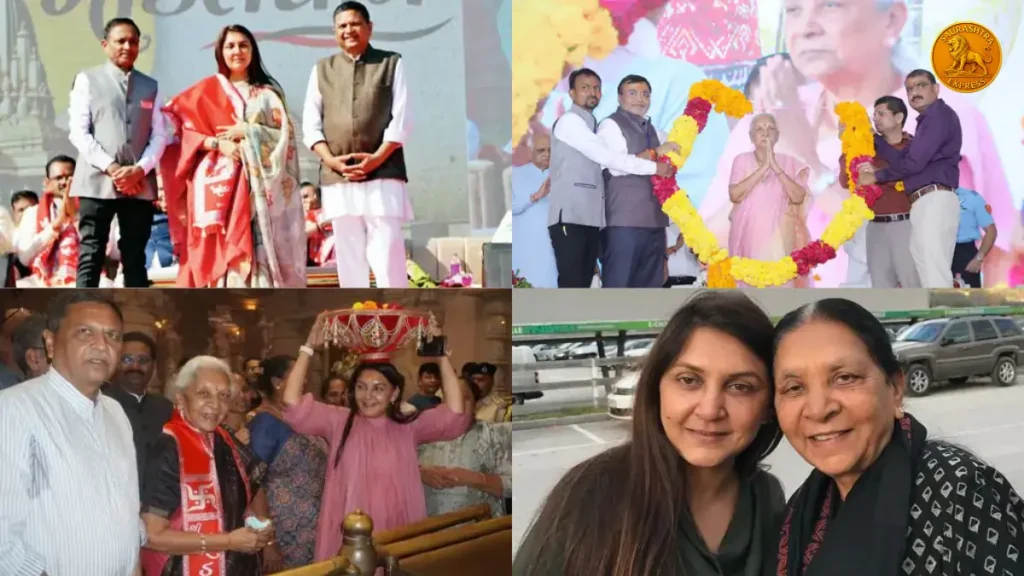
Naresh Patel Khodaldham: a significant development took place at Khodaldham, the grand temple dedicated to Goddess Khodiyar, located near Kagvad village in the Virpur region of Saurashtra. The announcement of Anar Patel as the new president of the Khodaldham organization has stirred both religious and political circles across Gujarat. This move, orchestrated under the guidance of Naresh Patel Khodaldham, reflects a strategic blend of social influence and political foresight, demonstrating how religious institutions can intersect with electoral politics in modern India.
Khodaldham: A Cultural and Religious Powerhouse
Khodaldham is more than just a temple; it is a symbol of devotion for the Leuva Patidar community and a central hub for socio-political mobilization in Saurashtra. Over the years, the temple has hosted grand religious ceremonies, cultural fairs, and festivals, attracting thousands of devotees and reinforcing the community’s cultural identity.
However, Khodaldham has also evolved into a strategic platform, often influencing political dynamics in the state. As Gujarat approaches critical elections, the temple and its leadership frequently emerge in public discourse, especially due to the temple’s significant sway over the largest vote bank in the Leuva Patidar community.
The Strategic Rise of Anar Patel
Three years ago, Anar Patel, daughter of former Gujarat Chief Minister and current Governor of Uttar Pradesh, Anandiben Patel, joined the Khodaldham Trust as a trustee. Her recent elevation to president marks a deliberate strategy to strengthen the organization’s influence beyond its traditional stronghold in Saurashtra.
According to internal sources from Khodaldham, who requested anonymity, the strategy behind Anar Patel’s appointment involves four key objectives:
- Empowering Women in Leadership: By placing a woman at the helm of Khodaldham, the organization aims to project inclusivity and modernity, strengthening its appeal across Gujarat.
- Political Mobilization Ahead of Local Elections: With upcoming Panchayat and municipal elections, the organization can leverage its influence to consolidate votes and political support.
- Preparation for the 2027 State Assembly Elections: Khodaldham aims to play a decisive role in shaping electoral outcomes, potentially positioning its leadership for strategic influence.
- Future Political Aspirations for Leuva Patidars: Naresh Patel has long advocated for the Leuva Patidar community to have a chief ministerial presence in Gujarat. Elevating Anar Patel positions her as a potential frontrunner for leadership in the state’s political landscape.
These strategies underscore a deliberate merging of social, religious, and political objectives, demonstrating how Naresh Patel Khodaldham is navigating the complex interplay of faith and governance.
From Social Service to Political Influence
Anar Patel’s journey from social work to political influence has been methodical. Her appointment as Khodaldham president is seen as a formal introduction to the political arena, a move that benefits both her and the Leuva Patidar community. Analysts suggest that with unified community support, Anar Patel’s presence could significantly shape electoral outcomes in the 2027 Gujarat Legislative Assembly elections.
Khodaldham’s organization had traditionally been Saurashtra-centric. By appointing Anar Patel, whose family has deep political roots and widespread recognition, the leadership aims to expand Khodaldham’s influence to Ahmedabad, Gandhinagar, and northern Gujarat. This move effectively transforms Khodaldham from a regional religious institution into a state-wide cultural and socio-political force.
The Legacy of the Patidar Vote Bank
The Patidar community’s influence in Gujarat politics is well-documented. With the Leuva Patidars forming a substantial voting bloc, their alignment can sway election results in multiple constituencies. Naresh Patel, the chairman of Khodaldham, has consistently leveraged this influence, using the temple’s platform to engage with community members and facilitate political dialogue.
Anar Patel’s rise within Khodaldham not only consolidates Naresh Patel’s authority but also bridges the organizational and electoral ambitions of the community. By providing a visible, respected figure as president, Khodaldham can effectively negotiate both social leadership and political relevance simultaneously.
January 21: A Day of Tradition and Transformation
Historically, January 21 has been a key date for Khodaldham, hosting significant ceremonies from foundation stone laying to major religious festivals. This year, the appointment of Anar Patel as president was formally announced on this date, coinciding with the temple’s traditional gatherings. The announcement sparked considerable excitement among trustees and volunteers, signaling a new chapter in Khodaldham’s evolving role in Gujarat’s socio-political fabric.
Expansion Beyond Saurashtra
Khodaldham’s influence is no longer confined to Saurashtra. Construction of a new Khodaldham temple near Sander village, between Mehsana and Patan, marks the organization’s northern expansion. With Anar Patel and Anandiben Patel both hailing from northern Gujarat, the temple’s reach now extends toward Gandhinagar and the broader northern region, ensuring the continuity of the temple’s cultural and political influence.
Political Footprints of Khodaldham Trustees
The intertwining of Khodaldham and politics is not new. Trustees of the temple have previously contested elections, with varying degrees of success. From Ramesh Tilala’s successful bid for the Rajkot assembly seat to Dinesh Chovatia’s unsuccessful Congress run, the temple has historically provided a platform for political ambition. Other trustees, such as Ravi Ambaliya and Gopalbhai Vastrapar, have also participated in elections, reflecting the institution’s persistent engagement with Gujarat’s political landscape.
Naresh Patel’s strategic meetings with multiple political parties during election seasons further underscore Khodaldham’s influence. While he maintains a historically Congress-oriented stance, recent trends indicate a tilt toward the ruling BJP, leveraging the Patidar vote bank for broader political objectives.
Who is Anar Patel?
Anar Patel’s social work spans over three decades, focusing on education, skill development, and women empowerment. She is widely recognized as a social entrepreneur and co-founder of the Manav Sadhna Trust, which currently serves over 7,000 beneficiaries. Her initiatives, “Gramshree” and “CraftRoots,” have provided employment to over 35,000 artisans across 21 Indian states, particularly promoting handicrafts and women’s economic empowerment.
Anar Patel’s educational background includes a B.Sc. and an MBA from Nirma University. She is the daughter of Anandiben Patel, former Chief Minister of Gujarat and current Governor of Uttar Pradesh, and the daughter-in-law of Padma Shri Ishwarbhai Patel. Her blend of social activism, business acumen, and political lineage makes her a pivotal figure in Khodaldham’s future strategy.
Also read: मोरबी–जामनगर–राजकोट त्रिकोण बनेगा ‘मिनी जापान’: पीएम मोदी-Rajkot news
Conclusion: Khodaldham at the Intersection of Faith and Politics
The elevation of Anar Patel to president of Khodaldham under Naresh Patel Khodaldham’s guidance is more than a ceremonial appointment. It represents a calculated strategy to expand the temple’s influence, consolidate community support, and position key figures for future political roles. As Khodaldham extends its reach beyond Saurashtra to Gandhinagar and northern Gujarat, the organization is set to become an even more significant force in both religious and political spheres.
With Gujarat approaching critical elections, the leadership of Khodaldham—anchored by Naresh Patel and reinforced by Anar Patel—illustrates how religious institutions can serve as platforms for socio-political mobilization. This blend of devotion, culture, and strategic foresight highlights the evolving dynamics of community leadership in contemporary Gujarat.