
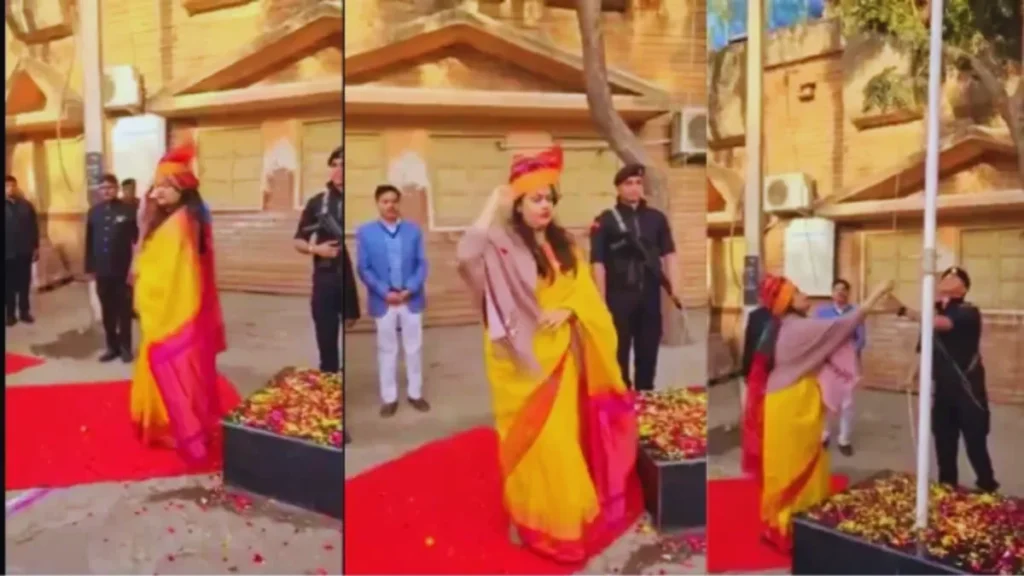
Barmer, Rajasthan – Republic Day 2026 celebrations in Barmer took an unexpected turn when Tina Dabi, the district’s IAS officer and former UPSC topper, appeared momentarily uncertain during the flag hoisting ceremony. A video capturing the brief lapse quickly went viral, sparking debates and reactions across social media platforms.
The clip, circulating widely on platforms like X (formerly Twitter) and Instagram, shows Tina Dabi completing the ceremonial duties but pausing in confusion about the correct direction to face while saluting the national flag. The incident lasted only a few seconds but garnered significant attention online, prompting a mix of criticism, humor, and support.
The Moment That Went Viral
During the Republic Day event at the Barmer district office, Tina Dabi was tasked with hoisting the national flag, an official responsibility that comes with strict protocol. As the tricolour was unfurled, officers and security personnel stood in attention, observing the ceremony with precision.
However, a brief moment of hesitation by Tina Dabi drew the eye of viewers. After raising the flag, she appeared uncertain about where to direct her salute. A vigilant security guard, positioned behind her, was quick to intervene with subtle gestures, guiding her to the correct orientation. Once she adjusted her stance, Tina Dabi completed the salute and the ceremony continued without further incident.
Although the misstep was fleeting, social media users seized on the video, and discussions exploded over the expectations of senior officers during national events.
2016 UPSC AIR-1
— BRADDY (@braddy_Codie05) January 26, 2026
🤣🤣🤣🤣🤣🤣🤣🤣 pic.twitter.com/0PhTvNuhZm
Social Media Reaction
The online response to Tina Dabi’s brief lapse was swift and varied. Many users questioned how a senior administrative officer could appear uncertain during such a high-profile event. Critics argued that mistakes during national ceremonies undermine the professionalism expected from IAS officers. Comments ranged from concern over adherence to protocol to more humorous takes on the situation.
Some posts suggested that the focus on public image and media presence may be overshadowing administrative discipline. “It seems officers are more conscious of how they look on camera than performing duties accurately,” one user remarked. Another post joked, “At least she remembered to salute, even if she was looking in the wrong direction first!”
Amid criticism, a subset of users highlighted the security guard’s role, praising the officer’s attentiveness and quick response. Many online commentators noted that the guard’s intervention ensured the ceremony proceeded smoothly, avoiding potential embarrassment. Vivek Srivastava, who shared the video on X, wrote, “Kudos to the security guard – calm, alert, and professional. A moment of clarity prevented a larger blunder.”
Discussions on the Culture of ‘Celebrity Officers’
The incident involving Tina Dabi also reignited discussions about the increasing public visibility of high-ranking officials. Over the past few years, certain IAS officers have gained significant recognition through social media engagement, public appearances, and proactive communication with citizens. While this visibility is praised by supporters for improving government transparency and citizen engagement, it also invites intense scrutiny.
Critics argue that when officers are treated like public figures or social media personalities, even minor mistakes are magnified and sometimes mocked. “High-ranking officials are public servants first, celebrities second,” one commentator noted. “A small slip during a ceremony should remind us that discipline and protocol cannot be compromised for optics.”
Supporters, however, maintain that officers like Tina Dabi, who have a strong public presence, help bridge the gap between administration and the people. Her achievements as a UPSC topper and the youngest IAS officer of her batch have made her a recognizable face nationally, and many citizens appreciate her efforts to maintain visibility while performing official duties.
The Role of Social Media in Amplifying Minor Mistakes
The viral spread of the video reflects a broader trend in the digital age, where even fleeting moments during official ceremonies can attract widespread attention. While Tina Dabi’s hesitation lasted only seconds, it has prompted discussions on social media about protocol adherence, the pressures of public life, and the influence of cameras on official duties.
Experts suggest that such incidents underscore the double-edged nature of social media exposure for public servants. While platforms allow officers to communicate achievements, policy updates, and civic messages directly to citizens, they also magnify every small error, often sparking disproportionate reactions.
Tina Dabi’s Track Record
Despite the recent criticism, Tina Dabi has an impressive professional record. She rose to national attention after topping the UPSC exams and has since held prominent positions, including serving as the District Collector in several districts. Known for her dedication and progressive approach, Tina Dabi has often been lauded for initiatives that improve governance, streamline public services, and enhance administrative efficiency.
Her work has earned her accolades both within government circles and among citizens. In Barmer, she has been involved in several development projects, including improvements in education, healthcare access, and women’s empowerment programs. These initiatives highlight her commitment to governance, despite the temporary viral moment that attracted online scrutiny.
Moving Forward
While the Republic Day incident may have sparked criticism, officials and citizens alike stress the importance of viewing such events in perspective. Human errors, especially brief moments of hesitation, are natural even for experienced professionals. The focus, many argue, should remain on the substantial contributions officers like Tina Dabi make in public service.
Moreover, the episode highlights the role of teamwork in administration. The security guard’s intervention during the ceremony serves as a reminder that public events rely not just on individual officers but also on the coordinated efforts of support staff, ensuring that traditions and protocols are upheld seamlessly.
Also read: Army Vehicle Plunges into Deep Gorge in Jammu Kashmir, 10 Soldiers Martyred in Doda Tragedy
Public Perception and Lessons Learned
The Tina Dabi incident is likely to remain a talking point for some time, but it also opens a larger conversation about expectations from public servants in the age of social media. Citizens and officials are reminded that while visibility is important, adherence to protocols and disciplined execution of duties are equally critical.
Social media reactions, both critical and supportive, demonstrate the nuanced relationship between public expectations and official responsibilities. While minor errors may be quickly amplified, they also offer an opportunity to reflect on training, preparation, and the balance between visibility and performance.
Conclusion
The brief moment of confusion during the Republic Day ceremony in Barmer, involving Tina Dabi, has captured public attention nationwide. Yet, it also serves as a reminder that even high-profile officers are human and subject to occasional lapses.
As debates continue, the broader discussion emphasizes the importance of professional rigor, teamwork, and measured engagement with media. Officers like Tina Dabi, whose careers have inspired many, continue to navigate the delicate balance between public presence and administrative responsibility, highlighting both the opportunities and challenges of serving as a modern-day civil servant in India.