
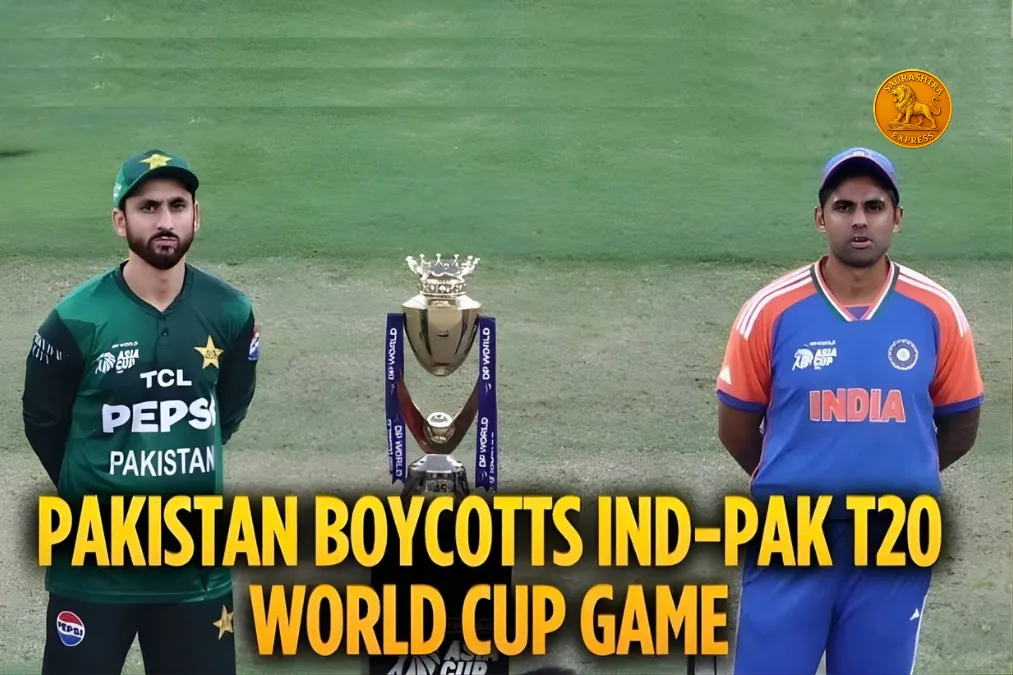
Has Pakistan Boycott T20 World Cup: The global cricket community has been thrown into turmoil by one pressing question dominating headlines and fan debates alike: Has pakistan boycott t20 world cup? What initially appeared to be a political statement or strategic posturing by the Pakistan Cricket Board (PCB) has now escalated into a serious crisis that could reshape Pakistan’s future in international cricket.
Pakistan’s reported reluctance to face India during the ICC Men’s T20 World Cup has not only alarmed the International Cricket Council (ICC) but also raised concerns about financial penalties, competitive disadvantages, and long-term isolation from the global cricket ecosystem. Experts warn that a boycott, even partial, could prove devastating for Pakistan cricket—both on and off the field.
This article breaks down the situation in detail, examining the ICC’s response, the possible consequences for Pakistan, reactions from India’s cricket authorities, and why this decision may turn into one of the most costly miscalculations in PCB history.
The Core Issue: Has Pakistan Boycott T20 World Cup or Just One Match?
At the heart of the controversy lies a crucial distinction. Pakistan has not officially withdrawn from the entire tournament. Instead, statements from Pakistan’s government suggest that the team is willing to participate in the T20 World Cup—but will not play against India.
However, from the ICC’s perspective, refusing to play a scheduled match is effectively a boycott under tournament regulations. ICC officials have reportedly urged PCB to reconsider its stance, emphasizing that international tournaments operate under strict participation rules that do not allow selective match refusals.
The question “Has pakistan boycott t20 world cup” therefore remains open-ended, but the consequences of Pakistan’s current position are already becoming clear.
ICC’s Strong Warning to PCB
The ICC has made it clear that tournament participation is non-negotiable. According to ICC regulations, all teams must honor fixtures once they commit to an event. Any refusal without acceptable justification—such as verified security threats acknowledged by the ICC—can lead to severe disciplinary action.
Sources close to the ICC indicate that Pakistan has been asked to formally explain its position. If the reasoning is deemed unsatisfactory, the ICC has the authority to:
- Impose heavy financial penalties worth millions of dollars
- Enforce points deductions or technical forfeits
- Suspend Pakistan from the ongoing tournament
- Reduce Pakistan’s future revenue share
- Impose long-term bans from ICC events
For a board already struggling with financial instability, these sanctions could be catastrophic.
BCCI’s Measured Response
While emotions are running high among fans and commentators, the Board of Control for Cricket in India (BCCI) has chosen a cautious and diplomatic approach.
BCCI Vice-President Rajeev Shukla addressed the issue by emphasizing respect for the ICC’s authority. He stated that the ICC had released an important statement highlighting the spirit of sportsmanship and that BCCI fully aligns with the global body’s position. Shukla added that BCCI would refrain from making further comments until discussions with the ICC are completed.
This measured response underlines India’s intent to let the ICC handle the matter, avoiding escalation while keeping the focus on tournament integrity.
Impact 1: Group Stage Exit Looms Large
One of the most immediate consequences of refusing to play India is the severe impact on Pakistan’s tournament prospects.
Under ICC Playing Condition 16.10.7, a team that forfeits a match is considered to have scored zero runs in its allotted overs, while the opposing team is awarded full points without affecting its net run rate.
This rule would significantly damage Pakistan’s net run rate (NRR), making qualification extremely difficult—even if the team wins its remaining matches.
Pakistan is placed in Group A alongside:
- India
- Namibia
- Netherlands
- United States
In such a competitive group, even a single loss could eliminate Pakistan. The risk is real—Pakistan was famously knocked out by the USA in the previous T20 World Cup, while the Netherlands have built a reputation for causing major upsets in ICC tournaments.
Refusing to play India could therefore all but guarantee an early exit.
Impact 2: Risk of ICC Suspension from the Tournament
If Pakistan fails to provide a convincing explanation for its refusal, the ICC may go a step further and suspend Pakistan from the World Cup altogether.
Historically, teams have faced serious consequences for boycotts. While there have been instances where teams skipped matches due to extraordinary circumstances, those cases involved complex diplomatic or security concerns verified by the ICC itself.
In Pakistan’s case, the argument becomes weaker because all matches are scheduled to be played at neutral venues, including Sri Lanka. Security concerns—often cited in such disputes—are unlikely to hold weight.
This raises the possibility that Pakistan could be barred from the tournament mid-way, a move that would send shockwaves through the cricketing world.
Impact 3: Pakistan Super League Faces Uncertain Future
Another major fallout could hit Pakistan’s flagship domestic tournament, the Pakistan Super League (PSL).
The ICC has reportedly warned PCB that if Pakistan adopts a confrontational stance or supports other teams’ political positions within ICC events, the board could face difficulties in securing No Objection Certificates (NOCs) for foreign players.
Without NOCs, top international cricketers would be unable to participate in the PSL, drastically reducing the league’s quality, global appeal, and commercial value.
Given that the PSL is one of PCB’s primary revenue sources, any restriction on player participation could inflict long-term financial damage.
Impact 4: What If India and Pakistan Meet in Knockouts?
One of the biggest unanswered questions remains: What happens if India and Pakistan are scheduled to face each other in the knockout stage?
So far, PCB has only addressed the group-stage fixture. It has not clarified whether the team would play India in a semi-final or final scenario.
ICC sources suggest that Pakistan will be required to provide a clear, written position on this issue. A refusal at the knockout stage would be viewed even more seriously, given the global stakes, broadcast commitments, and commercial interests involved.
Failure to comply could trigger harsher sanctions, including multi-year suspensions.
Players Caught in the Middle
Pakistan’s players appear to be victims of circumstances beyond their control. Team captain Salman Ali Agha has publicly stated that the players simply want to compete and perform at their best.
He acknowledged that if the government directs the team not to play a particular opponent, the players are obligated to follow instructions. However, he emphasized that the squad remains focused on giving its 100% in the tournament.
This highlights the uncomfortable reality faced by athletes when politics intersects with sport.
Impact 5: Future ICC Hosting Rights at Risk
Pakistan recently celebrated hosting the ICC Champions Trophy in 2025—its first major ICC event in nearly three decades. That milestone now appears to be under threat.
ICC revenue depends heavily on high-profile matches, especially India vs Pakistan clashes, which generate massive global viewership and advertising income. A boycott reduces the ICC’s earnings significantly.
To offset this loss, the ICC may consider:
- Reducing Pakistan’s annual revenue share
- Removing Pakistan from future hosting rotations
- Awarding major tournaments to more commercially reliable nations
Such decisions could set Pakistan back years in its efforts to re-establish itself as a premier cricket host.
Financial Consequences: A Board Already Under Pressure
PCB’s financial situation has long been fragile, relying heavily on ICC distributions and occasional windfalls from major tournaments.
A boycott-related penalty could mean:
- Loss of millions in prize money
- Reduced sponsorship confidence
- Strained relationships with broadcasters
- Long-term revenue decline
Cricket analysts warn that Pakistan could find itself increasingly isolated if it continues down this path.
Also read: T20 World Cup 2026: Pakistan Considers Boycotting High-Profile India Clash Amid ICC Dispute
Global Cricket’s Bigger Picture
The ICC’s primary concern is preserving the integrity and neutrality of international cricket. Allowing one team to selectively refuse fixtures could set a dangerous precedent.
If Pakistan is permitted to skip matches without consequence, other nations may follow suit in future tournaments, undermining the structure of global cricket competitions.
This is why the ICC’s response to the “Has pakistan boycott t20 world cup” controversy is being closely watched worldwide.
Conclusion: A Defining Moment for Pakistan Cricket
The unfolding situation represents a defining crossroads for Pakistan cricket. What began as a political stance has evolved into a potential existential threat to PCB’s standing in world cricket.
If Pakistan chooses confrontation over compromise, it risks financial ruin, competitive isolation, and long-term damage to its cricketing legacy. On the other hand, a willingness to engage with the ICC and honor tournament commitments could still prevent irreversible harm.
As fans, players, and administrators await the final decision, one thing is clear: the answer to “Has pakistan boycott t20 world cup” will shape not just this tournament, but the future of Pakistan cricket for years to come.