
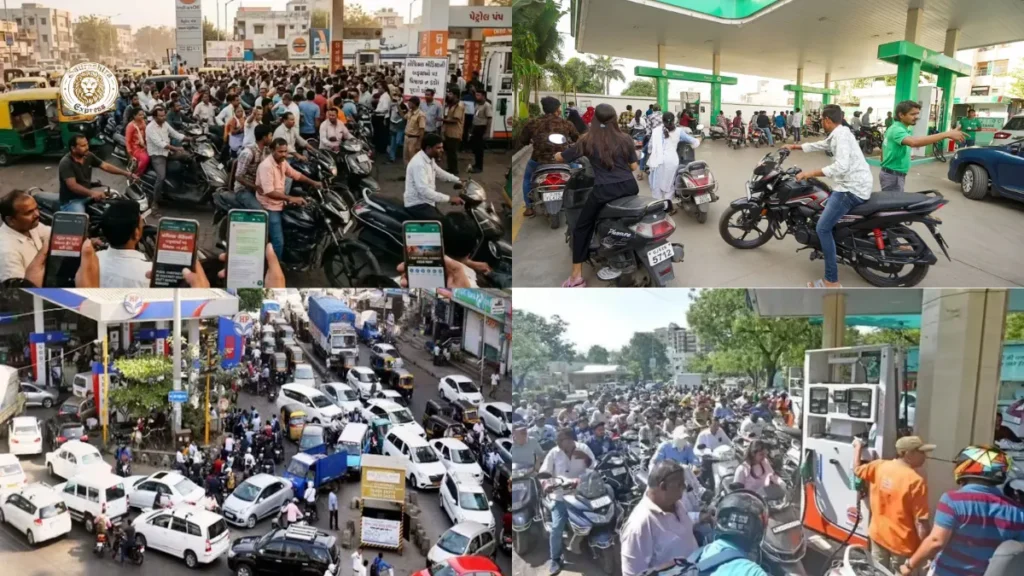
Ahmedabad/Surat/Vadodara/Rajkot/Dwarka: Concerns over a possible Fuel crisis in Gujarat? have triggered panic buying and long queues at petrol pumps across several major cities. While authorities insist there is no real shortage of fuel, a mix of supply delays, rumors, and rising demand has led to visible disruptions on the ground, leaving commuters frustrated and traffic systems strained.
Over the past few days, reports from cities like Ahmedabad, Vadodara, Surat, Rajkot, and Dwarka have painted a concerning picture—“No Stock” boards at petrol pumps, unusually long vehicle queues, and citizens rushing to refuel amid fears of a looming fuel shortage.
However, officials and industry associations have urged calm, emphasizing that the situation is temporary and largely driven by logistical issues rather than an actual depletion of fuel reserves.
What Triggered the Fuel Panic in Gujarat?
The root of the issue appears to be linked to global developments. Ongoing tensions and conflict in the Middle East have disrupted crude oil supply routes, particularly affecting maritime transportation. As a result, the supply chain of petroleum products has experienced delays.
India, which imports a significant portion of its crude oil requirements through the Strait of Hormuz, has been indirectly impacted. Shipping challenges in this crucial route have created uncertainties in supply schedules.
At the local level, additional factors worsened the situation:
- Delayed fuel deliveries to petrol pumps
- Payment processing issues during weekend bank holidays
- Sudden surge in demand due to panic buying
- Increased consumption from industrial buyers
These combined elements created the impression of a Fuel crisis in Gujarat?, even though supply at the macro level remains stable.
Ahmedabad and Vadodara: Queues, Confusion, and Temporary Closures
In Ahmedabad, several petrol pumps witnessed long queues as anxious motorists rushed to fill their tanks. The panic was largely fueled by social media rumors suggesting an imminent shortage.
According to local sources, fuel availability is not entirely exhausted. Instead, the issue stems from irregular delivery schedules. Around 8–10 petrol pumps in the city reportedly did not receive timely stock replenishment, forcing them to temporarily halt operations—not due to closure, but due to delayed supply.
This temporary disruption led to a ripple effect:
- Increased crowding at operational pumps
- Panic buying behavior
- Traffic congestion near fuel stations
A similar trend was observed in Vadodara, where private petrol pumps faced short supply. As a result, vehicle owners turned toward government-operated fuel stations, causing overcrowding and a situation resembling panic buying.
Traffic Chaos: Long Queues Spill Onto Main Roads
The rush at petrol pumps did not just inconvenience motorists—it also disrupted traffic flow across major roads.
In Ahmedabad, key areas including the SG Highway witnessed severe traffic jams. Long lines of vehicles waiting to refuel extended onto main roads, slowing down movement and creating bottlenecks.
Drivers found themselves stuck in traffic for hours under intense heat, adding to their frustration. The combination of:
- High temperatures
- Long waiting times
- Traffic congestion
turned an already stressful situation into a major urban challenge.
Residents described the situation as chaotic, with many caught between the urgency to refuel and the difficulty of navigating through jammed roads.
Surat: Industrial Demand Adds Pressure on Fuel Supply
In Surat, the situation has been further complicated by industrial demand.
Fuel supply from oil companies has reportedly decreased sharply. Earlier, petrol pumps would receive around three tanker deliveries per day. Now, that number has dropped to just one or slightly more, creating a significant gap between supply and demand.
Adding to the pressure, industrial consumers—who typically procure fuel directly from oil companies—are now turning to retail petrol pumps. This shift has occurred due to a price increase of around ₹12 per litre in direct industrial supply.
As a result:
- Bulk buying by industries has reduced fuel availability for common citizens
- Retail petrol pumps are struggling to meet rising demand
- Local supply chains are under stress
This imbalance has contributed heavily to the perception of a Fuel crisis in Gujarat? in Surat.
Rajkot: Rumors Fuel Unnecessary Panic
In Rajkot, long queues were also reported at several petrol pumps. However, the local petrol pump association has clarified that there is no real shortage of fuel in the city.
Officials stated that:
- Adequate stock is available
- Panic was triggered due to rumors
- Closure of a few nearby pumps led to confusion
The association urged citizens not to believe unverified information and to avoid unnecessary panic buying.
Despite these assurances, the spread of misinformation led to temporary overcrowding at several fuel stations.
Dwarka: Tourists Face Fuel Shortage During Weekend Rush
The situation in Dwarka has been particularly challenging due to a surge in tourist activity.
Being a major pilgrimage destination, Dwarka saw a heavy influx of visitors over the weekend. The sudden increase in fuel demand exhausted supplies at the city’s two main petrol pumps.
As a result:
- Tourists struggled to find fuel
- Vehicles were left stranded
- Travel plans were disrupted
Pump operators indicated that fresh fuel supplies were expected by Monday evening, but the temporary shortage caused significant inconvenience to visitors.
What Does the Petrol Pump Association Say?
The Federation of Gujarat Petrol Dealers Association has clarified that the current situation should not be mistaken for a full-scale fuel crisis.
According to the association:
- There is no major shortage of petrol or diesel
- Weekend bank holidays delayed payments by pump operators
- Fuel supply was temporarily halted due to payment issues
The association has requested authorities to ensure uninterrupted supply even during weekends to prevent such disruptions in the future.
Gujarat Government’s Assurance: No Need to Panic
The Gujarat state government has stepped in to address public concerns surrounding the Fuel crisis in Gujarat? narrative.
In an official statement, authorities reassured citizens that:
- There is sufficient stock of petrol and diesel across the state
- Supply chain issues are being actively resolved
- Timely fuel delivery will be restored across all regions
The government also urged people to:
- Avoid panic buying
- Ignore rumors and misinformation
- Cooperate with authorities during the temporary disruption
Additionally, officials warned that strict legal action would be taken against individuals spreading false information or attempting to create panic.
India’s Fuel Security: Adequate Reserves in Place
Addressing the broader issue, Prime Minister Narendra Modi recently spoke in Parliament about the country’s fuel situation.
He highlighted that:
- A large portion of India’s crude oil imports passes through the Strait of Hormuz
- Ongoing geopolitical tensions have made shipping routes more challenging
- The government is taking steps to ensure uninterrupted fuel supply
Importantly, he revealed that:
- India currently holds around 5.3 million metric tonnes of petroleum reserves
- Additional reserves are maintained by oil companies
These reserves act as a buffer, ensuring that short-term disruptions do not escalate into a full-blown crisis.
The Prime Minister also noted that India imports nearly 60% of its LPG requirements. Efforts are underway to boost domestic production and reduce dependency on imports.
Is There Really a Fuel Crisis in Gujarat?
Despite the visible chaos at petrol pumps, experts believe that the situation does not qualify as a genuine fuel crisis.
Instead, it is a combination of:
- Temporary logistical disruptions
- Panic-driven demand spikes
- Misinformation spreading rapidly
The keyword question—Fuel crisis in Gujarat?—reflects public anxiety rather than an actual depletion of fuel resources.
Authorities maintain that:
- Fuel supply remains stable at the national level
- Local disruptions are being addressed
- Normalcy is expected to return soon
What Citizens Should Do
In situations like these, public cooperation plays a crucial role in maintaining stability.
Citizens are advised to:
- Avoid unnecessary fuel purchases
- Refuel only when needed
- Verify information from official sources
- Stay calm and patient
Panic buying not only worsens the situation but also deprives others of essential access to fuel.
Also Read: Bhavnagar Railway Division Boosts Passenger Comfort with Additional AC Coaches in Key Trains
Conclusion: Temporary Disruption, Not a Crisis
The recent developments across Gujarat highlight how quickly rumors and supply hiccups can escalate into widespread panic.
While scenes of long queues and “No Stock” signs may suggest a serious issue, the reality is far less alarming. The current situation is temporary and manageable, with authorities and industry players actively working to restore normal supply levels.
The question—Fuel crisis in Gujarat?—may be trending, but the answer, for now, is reassuring: Gujarat is not facing a real fuel crisis, only a short-term disruption fueled by logistics and panic.
As supply chains stabilize and awareness improves, the situation is expected to return to normal in the coming days. Until then, calm and informed behavior remains the best response for citizens across the state.