
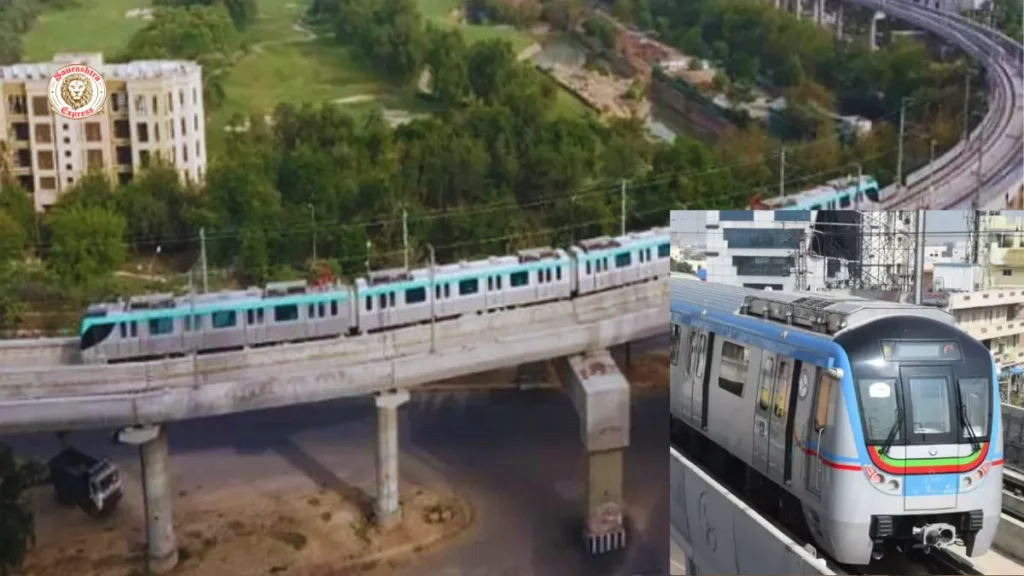
Surat Metro Ticket Price: Surat, one of India’s fastest-growing cities, is finally on the verge of entering a new era of public transportation. The much-awaited Surat Metro project has reached a significant milestone, as trial runs have officially begun on a key stretch of the corridor. This development has sparked excitement among residents who have been waiting for years to experience a faster, safer, and more efficient mode of travel.
The metro trial run has commenced between Dream City and Althan Tenement stations, covering a distance of 8.5 kilometers. With this progress, the vision of a fully operational Surat Metro system is now closer than ever before.
Trial Run Begins on 8.5 km Stretch
The trial run of the Surat Metro marks a crucial step in the project’s implementation. Authorities have confirmed that the viaduct construction between Dream City and Althan Tenement stations has been completed successfully. Along with this, essential infrastructure such as track laying and third rail installation for traction power has also been finished.
This stretch is now being used for extensive testing of metro train operations. The trial phase is expected to include around 500 hours of train running, during which multiple technical and safety parameters will be evaluated.
The testing process will also involve inspections by regulatory bodies such as the Research Design and Standards Organization (RDSO) and the Commissioner of Metro Rail Safety (CMRS). These checks are mandatory before the metro can be opened for public use.
Seven Stations Near Completion
As part of the ongoing development, structural work for seven metro station buildings has already been completed. Significant progress has also been made in finishing works, including entry and exit structures.
This rapid pace of construction indicates that the project is moving steadily toward completion. Once operational, these stations will serve as key transit points for daily commuters, easing congestion on Surat’s busy roads.
Political Buzz Around Metro Trial
The timing of the trial run has also created discussions in political circles. With local body elections expected to be announced soon, including elections for multiple municipal corporations such as Surat Municipal Corporation, the metro trial has drawn attention.
There is speculation that the early trial run could influence public perception ahead of elections. However, officials have maintained that the trial is part of the planned project timeline and necessary for technical validation.
Two Major Corridors of Surat Metro
The Surat Metro project consists of two major corridors designed to cover key parts of the city:
Diamond Corridor: Dream City to Sarthana
Textile Corridor: Saroli to Bhesan
The foundation work for the project began on January 18, 2021. Since then, construction has been ongoing across multiple zones of the city.
Surat Metro Corridor Overview
| Corridor Name | Route | Length | Key Highlights |
|---|---|---|---|
| Diamond Corridor | Dream City to Sarthana | 22.27 km | Includes underground and elevated sections |
| Textile Corridor | Saroli to Bhesan | 19.26 km | Fully elevated route |
The total length of both corridors combined is approximately 40.45 kilometers, making it a large-scale urban mobility project.
Completion Target: June 2026
Officials have stated that the Surat Metro is expected to become fully operational by June 2026. This timeline is crucial for the city, which has been dealing with traffic congestion and disruptions due to ongoing construction work.
For the past five years, metro construction has impacted daily life and business activities in several areas. Residents and traders alike are now eagerly waiting for the project to be completed so that normalcy can return and commuting can become easier.
Driverless Technology and Modern Features
One of the most exciting aspects of the Surat Metro is its advanced technology. The metro trains will operate using a driverless train operation system, making it one of the most modern transit systems in India.
Each train will consist of three coaches and will be capable of reaching speeds of up to 80 km per hour.
Key Features of Surat Metro
- Driverless train operation system
- Maximum speed of 80 km/h
- CCTV surveillance in all coaches
- Fire detection systems
- Real-time monitoring technology
- Modern interiors inspired by Surat’s culture
The interiors of the metro coaches are being designed to reflect the identity of Surat. Themes inspired by the diamond industry, textile sector, and cultural elements like Garba are expected to be incorporated.
Proposed Fare Structure May Change
The fare structure for the Surat Metro has been proposed but is not yet finalized. Officials have indicated that ticket prices may be higher than those of the Ahmedabad Metro, although revisions are possible.
Final fare decisions will depend on several factors, including:
- Passenger demand
- Operational costs
- Electricity and maintenance expenses
- Government subsidies
Proposed Fare Structure-Surat Metro Ticket Price
| No. | Number of Stations | Distance (km) | Fare (₹) |
|---|---|---|---|
| 1 | 1 to 3 stations | 0 – 2 km | ₹10 |
| 2 | 4 to 6 stations | 2 – 5 km | ₹15 – ₹20 |
| 3 | 7 to 12 stations | 5 – 10 km | ₹25 |
| 4 | 13 to 20 stations | 10 – 18 km | ₹30 – ₹35 |
| 5 | More than 20 stations | Above 18 km | ₹40 |
Authorities have clarified that this is only an initial proposal. The final pricing will be determined after the operational framework is fully established.
Affordable Travel for Long Distances
The fare structure has been designed to encourage longer-distance travel. For instance, commuters traveling across more than 20 stations may only need to pay ₹40, making it a cost-effective option compared to private vehicles and auto-rickshaws.
This pricing strategy aims to reduce traffic congestion by encouraging more people to shift to public transport.
Textile Corridor: Sarthana to Bhesan Route

The Textile Corridor is a fully elevated route covering 19.26 kilometers with 19 stations.
Station List (Elevated)
| Stations |
|---|
| Bhesan |
| Botanical Garden |
| Ugat Parishad |
| Palanpur Road |
| L.P. Savani School |
| PVR Cinema Centre |
| Adajan Gam |
| Aquarium |
| Badi Narayan Mandir |
| Akshar Chowkdi |
| Majura Gate (Interchange) |
| Khatodara Darwaja |
| Dindoli Darwaja |
| Anjana Farm |
| Model Town |
| Magob |
| Bharat Cancer Hospital |
| Sarthana |
All stations on this corridor are elevated, ensuring smooth connectivity across key residential and commercial zones.
Diamond Corridor: Sarthana to Dream City Route
The Diamond Corridor spans 22.27 kilometers and includes both elevated and underground sections.
Underground Stations
| Stations |
|---|
| Kapodra |
| Laxmeshwar Chowk |
| Central Warehouse |
| Surat Railway Station |
| Maskati Hospital |
| Chowk Bazaar |
Elevated Stations
| Stations |
|---|
| Sarthana |
| Nature Park |
| Varachha Chowpati Garden |
| Shree Swaminarayan Mandir (Kalakunj) |
| Gandhibagh |
| Kadarshah Naal |
| Majura Gate (Interchange) |
| Udhna Canal |
| Althan Tenement |
| Althan Gam |
| VIP Road |
| Mahila ITI |
| Bhesan |
| Convention Center |
| Dream City |
Route Details
| Feature | Details |
|---|---|
| Total Length | 22.27 km |
| Total Stations | 21 |
| Elevated Section | 15.14 km |
| Underground Section | 6.47 km |
This corridor will connect major commercial hubs, residential areas, and key transit points, including the Surat Railway Station.
Impact on City Life and Economy
The introduction of the Surat Metro is expected to transform urban mobility in the city. With faster travel times, reduced congestion, and improved connectivity, the metro will play a vital role in boosting economic activity.
Businesses that have suffered due to prolonged construction are likely to benefit once the metro becomes operational. Improved accessibility will also attract more investment and development in surrounding areas.
Public Expectations and Future Outlook
Residents of Surat have high expectations from the metro project. After years of construction-related inconvenience, people are hoping that the system will deliver on its promises without further delays.
The June 2026 deadline is being closely watched, and citizens are optimistic that no further postponements will occur.
Conclusion
The start of the trial run is a landmark moment for the Surat Metro project. It signals that the city is on track to join the league of Indian cities with advanced metro rail systems.
With modern technology, well-planned routes, and affordable fares, the Surat Metro is set to redefine public transportation in the city. As testing continues and final approvals are awaited, Surat stands at the threshold of a major transformation that will shape its future for decades to come.