
15-Million-Year-Old Marine Fossils Unearthed in Mayurbhanj Offer New Clues About Odisha’s Geological Past
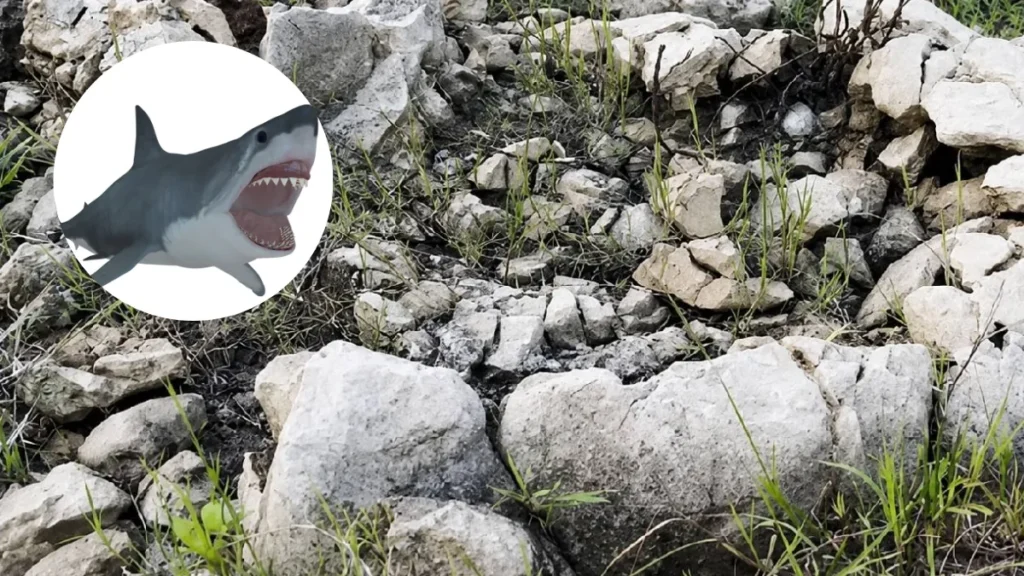
Odisha Shark Teeth Fossils: A remarkable fossil discovery in Odisha has provided fresh evidence that parts of the state were once submerged beneath an ancient sea millions of years ago. Researchers have uncovered fossilized shark teeth, vertebrae, and other marine remains estimated to be around 15 million years old, shedding new light on the region’s prehistoric environment.
The findings, now attracting the attention of scientists and paleontologists, were made near Baripada in Odisha’s Mayurbhanj district during an academic field visit conducted by researchers and students from the Department of Remote Sensing and GIS at North Odisha University.
Discovery Made During Educational Field Survey
The fossils were identified while a university team, led by Assistant Professor Dr. Debabrata Nandy, was conducting a field study with students. During the visit, researchers noticed unusual rock-like remains scattered across the area that appeared different from ordinary geological formations.
According to the research team, conversations with local residents revealed that villagers had long referred to the mysterious remains as “Asura Hadda,” a local term often associated with giant or mythical bones. This local curiosity prompted scientists to investigate the site more closely.
Detailed examination led to the recovery of several fossil specimens, including microscopic shark teeth, shark vertebrae, and fragments belonging to other ancient organisms. While some fossils have already been identified, experts are continuing to analyze additional samples to determine their origins.
#WATCH | Odisha: Almost 15 million-year-old fossils from the Miocene period were found in Baripada town of Mayurbhanj district. pic.twitter.com/MsZybpiDtF
— ANI (@ANI) June 18, 2026
Odisha Shark Teeth Fossils Point to an Ancient Marine Environment
The significance of the Odisha Shark Teeth Fossils lies in what they reveal about the region’s geological history. Sharks are marine animals, and their remains are generally found in areas that were once part of an ocean, sea, or coastal ecosystem.
Scientists believe the fossils date back to the Miocene Epoch, a period that lasted from approximately 23 million to 5.3 million years ago. Preliminary assessments suggest the newly discovered fossils are around 15 million years old.
The presence of shark fossils in an inland region strongly suggests that seawater once extended much farther into present-day Odisha than it does today. Researchers say such discoveries help reconstruct ancient coastlines and understand how landscapes have evolved over millions of years.
Evidence of Major Geological Changes
Today, the Bay of Bengal coastline lies roughly 60 kilometers away from the discovery site. However, the fossil evidence indicates that the area may have been connected to a marine environment in the distant past.
Geologists believe several natural processes could have contributed to this dramatic transformation. Changes in sea levels, sediment accumulation, shifting river systems, and tectonic activity may have gradually altered the landscape, causing the shoreline to retreat eastward over millions of years.
Such geological changes are not uncommon over long periods of Earth’s history. Fossil discoveries like these help scientists track how continents, coastlines, and ecosystems have changed through time.
Researchers Working to Reconstruct Ancient Ecosystems
The research team is now collaborating with paleontologists and specialists from other institutions to study the remaining fossils in greater detail. Their goal is to identify additional species and gain a clearer understanding of the ecosystem that existed in the region during the Miocene period.
By examining fossilized remains of marine animals and other organisms, scientists hope to reconstruct the environmental conditions that once supported life in this ancient coastal habitat.
The discovery could also contribute to broader studies of climate change and environmental evolution, offering valuable insights into how marine ecosystems responded to natural changes millions of years ago.
Also read: Vantara University Announced in Jamnagar as Anant Ambani Unveils New Initiative on His Birthday
Potential for Geotourism and Heritage Conservation
Beyond its scientific importance, the discovery may have educational and tourism value. Researchers believe the fossil site could eventually be recognized as a geo-heritage location, helping preserve evidence of Odisha’s ancient natural history.
Such recognition could encourage further research, promote public awareness of the region’s geological heritage, and create opportunities for educational tourism. If properly protected and documented, the site could become an important destination for students, researchers, and visitors interested in Earth’s prehistoric past.
The Odisha Shark Teeth Fossils discovery serves as a powerful reminder that the landscapes seen today often hold hidden stories from millions of years ago. As scientists continue their investigations, the fossils may reveal even more about the ancient sea that once covered parts of eastern India.