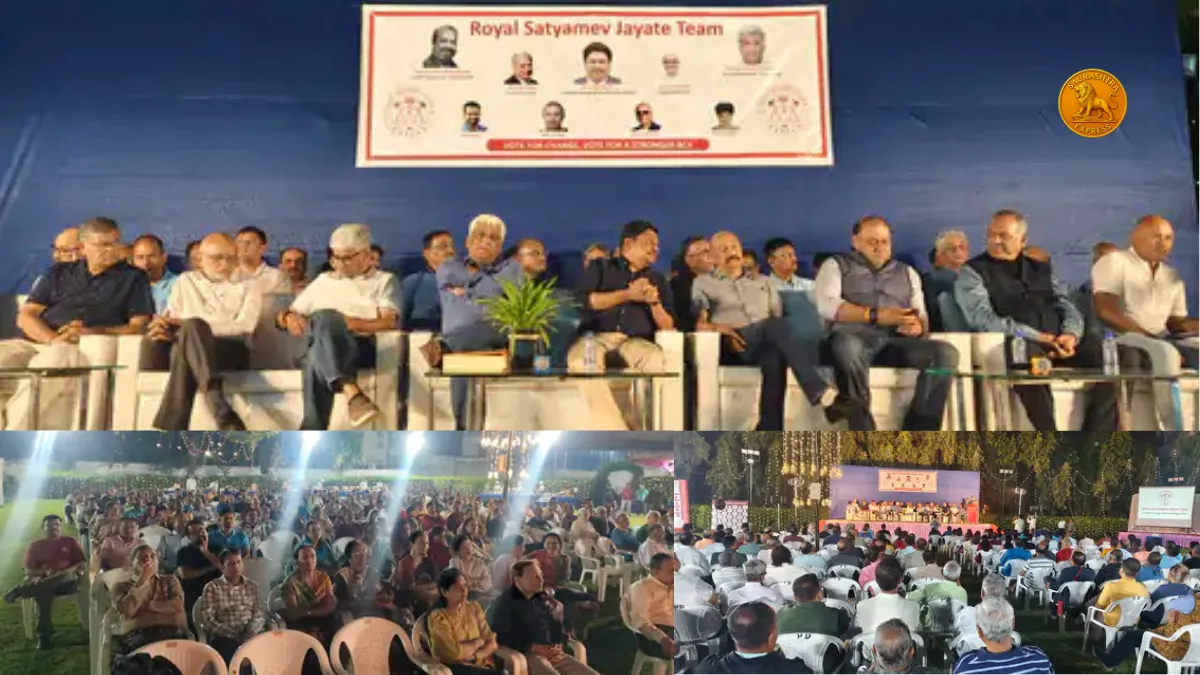
BCA Election 2026: Vadodara, one of India’s historic cricketing centres, is once again at the heart of an intense sporting and administrative debate as the Baroda Cricket Association (BCA) prepares for its much-anticipated elections scheduled for February 15. Ahead of the polls, the Royal Satyamev Jayate Group organised a major show of strength on Sunday night, February 1, at the Sayaji Vihar Club in Vadodara, drawing the attention of cricket administrators, former players, and BCA members alike.
The meeting was led by Darshan Banker, the Royal Satyamev Jayate Group’s candidate for the post of president, and was attended by several prominent figures. Among those present were Vadodara’s Maharaja Samarjitsinh Gaekwad, former BCCI secretary Sanjay Patel, Anant Indulkar, Jatin Vakil, and a large number of senior and general members of the BCA. The gathering served not only as a campaign event but also as a platform to openly discuss what the group described as a worrying decline in cricket standards in Vadodara over the past decade.
“No Major Cricketer from Vadodara After Hardik Pandya”
Addressing the members, Darshan Banker made a strong and candid assessment of the current state of cricket under the BCA. He stated that over the last ten years, the overall quality and competitiveness of cricket in Vadodara has deteriorated significantly.
“After Hardik Pandya, no major cricketer has emerged from Vadodara who has gone on to make a lasting impact at the national or international level,” Banker said. He added that this was not just a coincidence but the result of systemic issues in talent identification, player development, and cricket administration.
According to Banker, players from the region are struggling to progress beyond the local level. “Our cricketers are finding it extremely difficult to break into zonal or national teams. Even in the Indian Premier League, the selection of players from Vadodara has dropped sharply in recent years,” he noted.
He also pointed out that Baroda’s domestic performance has suffered. The team has failed to reach even the quarter-finals of the Ranji Trophy for the last 14 years, a statistic that has raised serious concerns among former players and cricket followers.
Vision for a Transparent and Inclusive BCA
Darshan Banker described the meeting as the group’s first formal interaction with BCA members during the election campaign. Despite being organised at short notice, the event witnessed an enthusiastic turnout, reflecting what he described as a strong desire for change among the members.
“Our vision is very clear,” Banker said. “We want to improve the quality of cricket and bring complete transparency into the functioning of the BCA. We also want former cricketers to be actively involved in the decision-making process so that those who understand the game from the inside can help shape its future.”
He emphasised that the group’s focus rests on three core areas: reviving cricketing standards in Vadodara, ensuring fair opportunities for local talent, and reforming the administrative structure of the BCA to make it more accountable and player-centric.
Stadium Facilities and Member Treatment Under Scrutiny
Beyond on-field performance, Banker also highlighted long-standing grievances related to stadium facilities and member management. He criticised the current system, stating that even BCA members are forced to stand in long queues for hours to obtain match tickets—an experience he described as unacceptable in the modern era.
“There is no proper seating arrangement for members inside the stadium,” he said. “Members are often made to sit on plastic chairs, while non-members enjoy better facilities in enclosed boxes. This situation needs to change.”
According to Banker, improvements are urgently required not just in seating, but also in overall stadium infrastructure and event management. He assured members that if elected, his group would prioritise upgrading facilities and restoring dignity and respect to BCA membership.
Maharaja Samarjitsinh Gaekwad on ‘Open Elections’ and New Faces
Speaking at the event, Maharaja Samarjitsinh Gaekwad highlighted the importance of democratic processes within sporting bodies like the BCA. He noted that elections are essential for maintaining transparency and accountability in any association.
“This is the first BCA election being held after the implementation of the Lodha Committee recommendations, which has made the process a completely open election,” he said. “As a result, many long-serving office-bearers, including myself, are no longer eligible to contest. This has opened the door for many new faces.”
Gaekwad described this as a positive development for the BCA, stating that fresh leadership often brings new ideas and renewed energy. He also mentioned that nearly 200 members attended the meeting at Sayaji Club, reflecting the growing interest and enthusiasm surrounding the election.
“Our campaign is currently in full swing,” he said, adding that the response from members so far has been encouraging.
Administrative Concerns and Member Representation
Maharaja Gaekwad also raised questions about the timing of the election, noting that BCA polls are typically held in September but have been scheduled this time on the day of Mahashivratri. He described this as an administrative issue that deserves careful consideration.
Another topic discussed was the demand from several senior members who wish to nominate family members as nominated members after them. This issue, he said, has sparked significant debate within the association and highlights the need for clear and fair policies.
“We are contesting this election while keeping all these important issues in mind,” Gaekwad stated.
Also read: Has Pakistan Boycott T20 World Cup? ICC Warning, Financial Risks, and the Heavy Price PCB May Pay
A Crucial Moment for the Future of BCA-BCA Election 2026
As the February 15 election approaches, the BCA stands at a critical crossroads. With allegations of declining standards, limited player progression, and inadequate facilities, the outcome of the polls could shape the future of cricket in Vadodara for years to come.
The Royal Satyamev Jayate Group has positioned itself as a reform-oriented alternative, promising transparency, inclusivity, and a renewed focus on grassroots development. Whether these promises translate into electoral success remains to be seen, but one thing is clear: the conversation around the future of the BCA has gained momentum, and members appear ready for a serious re-evaluation of how cricket is governed in Baroda.