The escalating Pakistan-Afghanistan War has taken a devastating turn after a major airstrike reportedly carried out by Pakistan struck Afghanistan’s capital, Kabul. The attack, which has drawn strong international concern, has triggered an immediate humanitarian response from India, which has stepped forward to assist the war-hit nation with critical medical supplies.
Deadly Airstrike Rocks Kabul
Tensions between Pakistan and Afghanistan have intensified in recent days, with both sides reportedly engaged in ongoing hostilities along their borders. The situation worsened dramatically when a powerful airstrike hit Kabul, causing widespread destruction and heavy casualties.
According to reports, the airstrike targeted the Omid Drug Addiction Treatment Hospital, a facility that was housing hundreds of patients undergoing rehabilitation. The bombing has been described as one of the most destructive incidents in the ongoing conflict, raising serious concerns about civilian safety and the protection of humanitarian facilities during wartime.
Afghan authorities have claimed that nearly 400 people receiving treatment at the center lost their lives in the attack. The scale of the casualties has shocked the global community and intensified calls for restraint and accountability.
Augmenting Afghanistan’s healthcare efforts.
— Randhir Jaiswal (@MEAIndia) November 28, 2025
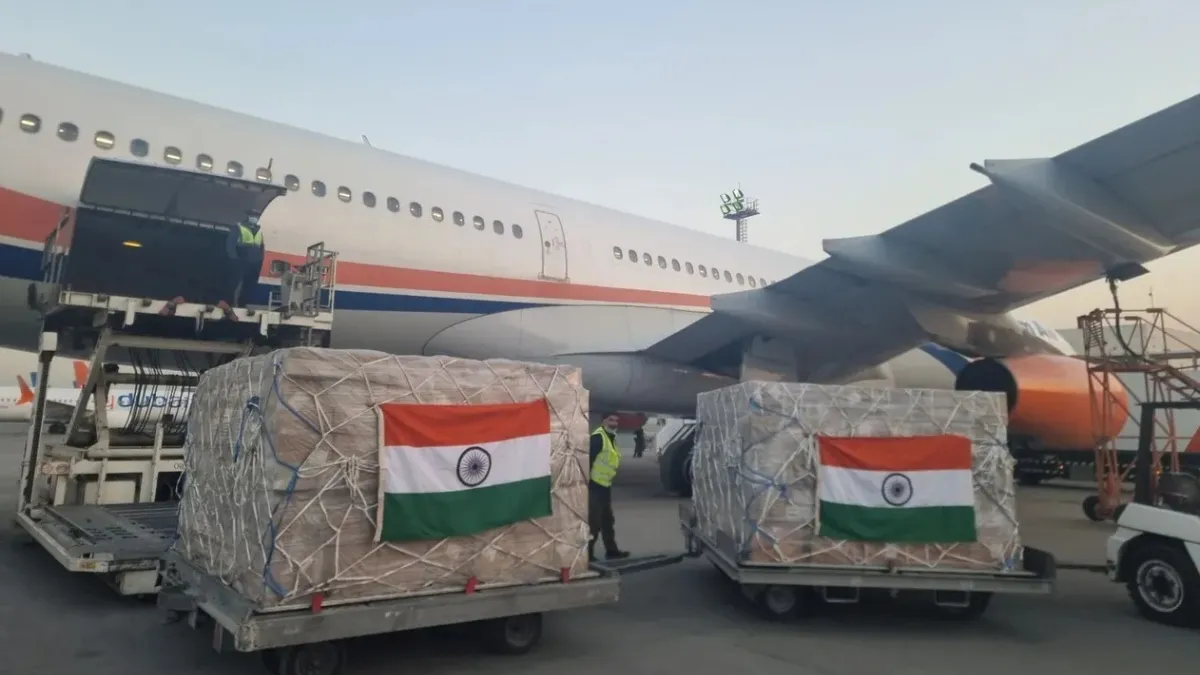
🇮🇳 has delivered 73 tonnes of life-saving medicines, vaccines and essential supplements to Kabul to cater to urgent medical needs.
India’s unwavering support to the Afghan people continues. pic.twitter.com/G4IU1a2O3v
India Steps In With Humanitarian Assistance
In response to the humanitarian crisis unfolding in Kabul, India has taken swift action to support Afghanistan. The Indian government dispatched approximately 2.5 tonnes of essential medicines and medical equipment to Kabul to aid in relief and treatment efforts.
The aid package includes life-saving drugs, medical kits, emergency healthcare supplies, and essential equipment required to treat the injured. This assistance is expected to play a crucial role in stabilizing the situation on the ground, where hospitals are overwhelmed with casualties.
India’s Ministry of External Affairs confirmed the development, stating that the country stands firmly with the people of Afghanistan during this difficult time. The ministry emphasized that India remains committed to providing humanitarian support and will continue to extend all possible assistance as the crisis evolves.
Strong Condemnation of the Attack
India has strongly condemned the airstrike, calling it “barbaric” and “inhumane.” Officials described the attack as a blatant violation of human rights and international norms, particularly given that the target was a medical facility treating vulnerable patients.
Government spokesperson Randhir Jaiswal criticized the strike, stating that such actions reflect deeply irresponsible behavior and disregard for civilian lives. He further stressed that targeting healthcare infrastructure during a conflict is unacceptable and undermines global efforts to maintain humanitarian standards in war zones.
India also characterized the attack as a direct assault on Afghanistan’s sovereignty, warning that such actions pose a serious threat to regional peace and stability.
Afghanistan Reacts to the Strike
The Taliban-led administration in Afghanistan has condemned the attack, describing it as a violation of Afghan airspace. Officials labeled the strike as an unjustified act of aggression and called for international attention to the incident.
Afghan authorities have reiterated that the targeted facility was not a military installation but a civilian healthcare center dedicated to treating drug addiction patients. The loss of hundreds of lives has further complicated the already fragile humanitarian situation in the country.
Background of the Targeted Facility
The Omid Drug Addiction Treatment Center has a unique and complex history. The facility was previously a United States military base before being taken over by the Taliban following the collapse of the Ashraf Ghani government in August 2021.
After assuming control, the Taliban repurposed the base into a large-scale rehabilitation center to address Afghanistan’s widespread drug addiction problem. The center became a key institution providing basic care and treatment to a significant number of patients struggling with substance abuse.
The transformation of a former military base into a healthcare facility symbolized an effort to address a major social issue. However, the recent airstrike has turned it into a site of tragedy, highlighting the vulnerability of civilian infrastructure amid escalating conflict.
Rising Concerns Over Regional Stability
The latest developments in the Pakistan-Afghanistan War have raised alarms across the region. Analysts warn that continued escalation could destabilize not only Afghanistan but also neighboring countries.
The conflict reflects deeper geopolitical tensions and internal challenges faced by both nations. Observers believe that cross-border violence is increasingly being used as a means to divert attention from domestic issues, further complicating the situation.
India’s response, centered on humanitarian assistance rather than military involvement, underscores its broader approach to regional crises. By focusing on relief efforts, India aims to support civilian populations affected by conflict while advocating for peace and stability.
International Community Urged to Act
The scale of destruction in Kabul has prompted calls for the international community to intervene diplomatically and ensure the protection of civilians. Human rights organizations have emphasized the need for accountability and adherence to international humanitarian law.
Experts argue that attacks on medical facilities must be investigated thoroughly, and those responsible should be held accountable. The incident has also renewed discussions about the importance of safeguarding healthcare infrastructure during armed conflicts.
Also Read: Army Vehicle Plunges into Deep Gorge in Jammu Kashmir, 10 Soldiers Martyred in Doda Tragedy
Conclusion
The ongoing Pakistan-Afghanistan War continues to inflict heavy suffering on civilians, with the Kabul airstrike marking a particularly tragic chapter. As Afghanistan grapples with the aftermath of the attack, India’s timely humanitarian aid offers some relief to those affected.
However, the broader situation remains volatile. Without meaningful diplomatic efforts and restraint from all parties involved, the risk of further escalation looms large. For now, the focus remains on saving lives, providing aid, and preventing the crisis from deepening further.