Petrol Diesel Price Excise Duty: In a significant move aimed at shielding consumers from rising fuel costs, the Indian government has announced a sharp reduction in petrol diesel price excise duty. The decision comes at a time when global crude oil prices have surged dramatically due to geopolitical tensions, particularly the ongoing conflict involving Iran.
The government has also introduced windfall taxes on fuel exports, including aviation turbine fuel (ATF) and diesel, to balance its fiscal position while ensuring domestic price stability.
Why India Reduced Petrol Diesel Price Excise Duty
The reduction in petrol diesel price excise duty is part of a broader strategy to control inflation and prevent a spike in fuel prices for consumers. With crude oil prices crossing the $100 per barrel mark, there were growing concerns about the ripple effect on transportation costs, goods pricing, and overall inflation.
The surge in oil prices has been largely attributed to disruptions in global supply chains, especially after tensions escalated in the Middle East. The near closure of the Strait of Hormuz—one of the world’s most critical oil transit routes—has added further pressure.
Impact of Global Oil Crisis
- Over 40% of India’s crude oil imports pass through the Strait of Hormuz
- Oil prices have crossed $100 per barrel
- Supply disruptions have increased volatility in global markets
India, being the world’s third-largest oil importer, remains highly vulnerable to such global developments.
New Excise Duty Rates on Petrol and Diesel
As per the latest government notification, excise duties have been significantly reduced.
Revised Petrol Diesel Price Excise Duty
| Fuel Type | Previous Excise Duty | New Excise Duty |
|---|---|---|
| Petrol | ₹13 per litre | ₹3 per litre |
| Diesel | ₹10 per litre | ₹0 per litre |
This steep reduction is expected to ease pressure on consumers and prevent immediate price hikes at fuel stations.
Financial Impact on Government Revenue
While the move brings relief to consumers, it comes at a substantial cost to the government’s finances.
- Estimated revenue loss: ₹70 billion every two weeks
- Recovery through export taxes: ₹15 billion
- Net fiscal impact: ₹55 billion per fortnight
The decision has also raised concerns among financial analysts about the government’s ability to meet its fiscal deficit target of 4.3% of GDP for the upcoming financial year.
Bond Market Reaction
Following the announcement:
- Yield on 10-year government bonds rose by 7 basis points
- Reached a 20-month high of 6.95%
This indicates investor concerns over increased borrowing and fiscal pressure.
Relief for Oil Marketing Companies
The reduction in petrol diesel price excise duty also provides significant relief to oil marketing companies (OMCs), which have been absorbing losses due to rising crude prices.
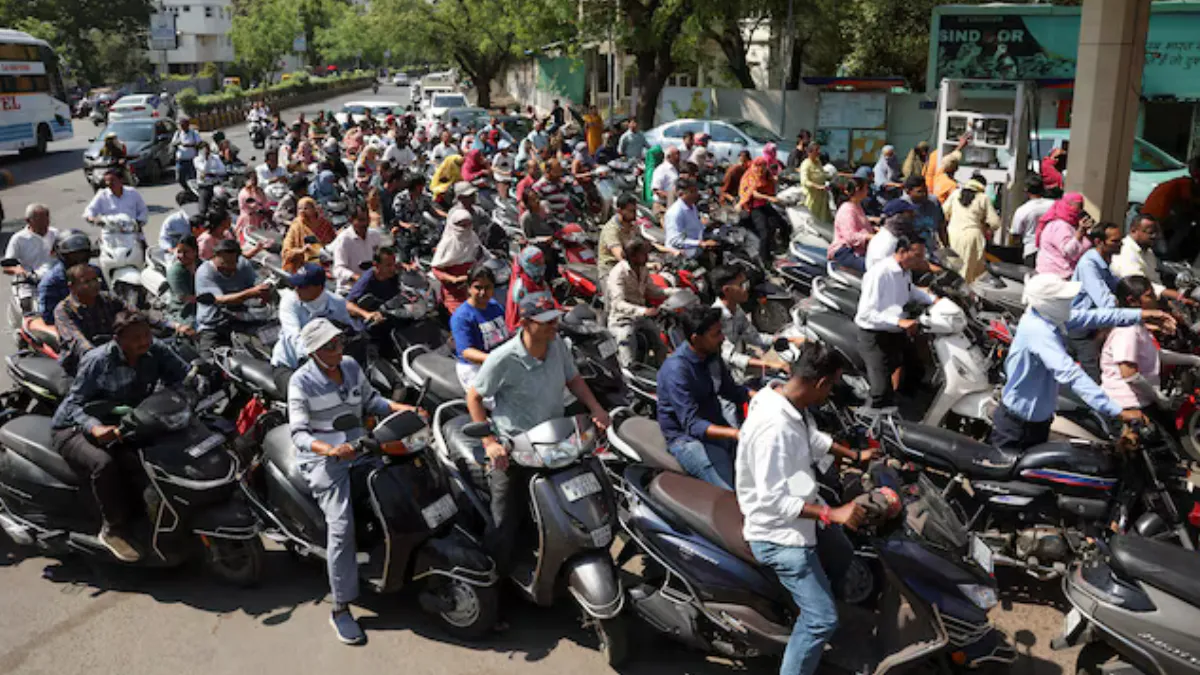
Although fuel prices in India are officially deregulated, government-owned companies dominate nearly 90% of the retail fuel market. These companies often delay price hikes to protect consumers, resulting in heavy financial losses.
Current Under-Recoveries
| Fuel Type | Estimated Loss per Litre |
|---|---|
| Petrol | ₹24 per litre |
| Diesel | ₹30 per litre |
According to the government, the total daily under-recoveries currently stand at ₹24 billion, highlighting the scale of financial stress on oil firms.
Union Oil Minister Hardeep Singh Puri stated that the tax cut will help reduce these losses and stabilize the sector during a period of high international prices.
Windfall Taxes on Fuel Exports Introduced
To offset revenue losses, the government has imposed windfall taxes on fuel exports.
New Export Tax Rates
| Product | Export Tax |
|---|---|
| Diesel | ₹21.5 per litre |
| Aviation Turbine Fuel | ₹29.5 per litre |
These taxes are aimed at ensuring that domestic fuel availability remains stable and that companies do not prioritize exports over local supply.
India’s Fuel Export and Import Dynamics
India is not only a major importer but also a significant exporter of refined petroleum products.
Export Data (April 2025 – January 2026)
| Fuel Type | Export Volume |
|---|---|
| Petrol (Gasoline) | 14 million metric tons |
| Diesel (Gasoil) | 23.6 million metric tons |
Following the new tax policy, many refiners have reportedly scaled back exports. Private sector giant Reliance Industries remains the largest fuel exporter in the country.
Government Assures No Fuel Shortage
Finance Minister Nirmala Sitharaman has reassured citizens that there will be no shortage of petrol, diesel, or aviation fuel in the country.
She emphasized that:
- The government will support oil companies financially
- Measures are in place to prevent price hikes
- Aviation fuel prices will also remain stable
Additionally, the government has confirmed that retail fuel prices will not change immediately despite global volatility.
Boost in LPG Supply for Industries
In response to the ongoing crisis, the government has also increased the allocation of liquefied petroleum gas (LPG) for industrial and commercial use.
Key Changes in LPG Allocation
- Increased by 20%
- Total supply now at 70% of pre-crisis levels
- Priority given to sectors like:
- Steel
- Automobiles
- Textiles
- Essential manufacturing industries
This move is expected to support industrial production and prevent supply chain disruptions.
India’s Dependence on Energy Imports
India continues to rely heavily on imported energy resources.
Key Statistics
- Cooking gas consumption: 33.15 million tons annually
- Import dependency: 60% of demand
- Middle East share: 90% of imports
These figures highlight India’s vulnerability to geopolitical tensions in oil-producing regions.
Political Context Behind the Decision
The timing of the petrol diesel price excise duty cut is also politically significant. With elections scheduled in multiple states and one union territory, rising fuel prices could have impacted voter sentiment.
Fuel prices are a highly sensitive issue in India, often influencing public opinion and electoral outcomes.
Ensuring Stability in Essential Sectors
Prime Minister Narendra Modi and his administration have emphasized that adequate arrangements are being made to ensure uninterrupted supply in critical sectors.
Focus Areas
- Fertiliser availability for summer sowing
- Coal supply for electricity generation
- Fuel availability for transportation and industry
These measures are aimed at maintaining economic stability during a period of global uncertainty.
Conclusion: Balancing Relief and Fiscal Pressure
The reduction in petrol diesel price excise duty reflects the government’s attempt to strike a delicate balance between consumer relief and fiscal discipline.
While the move offers immediate relief to households and businesses, it also places pressure on government finances. The introduction of export taxes and support for oil companies indicates a multi-pronged strategy to manage the crisis.
As global oil markets remain volatile, India’s policy decisions will continue to play a crucial role in stabilizing domestic fuel prices and protecting economic growth.