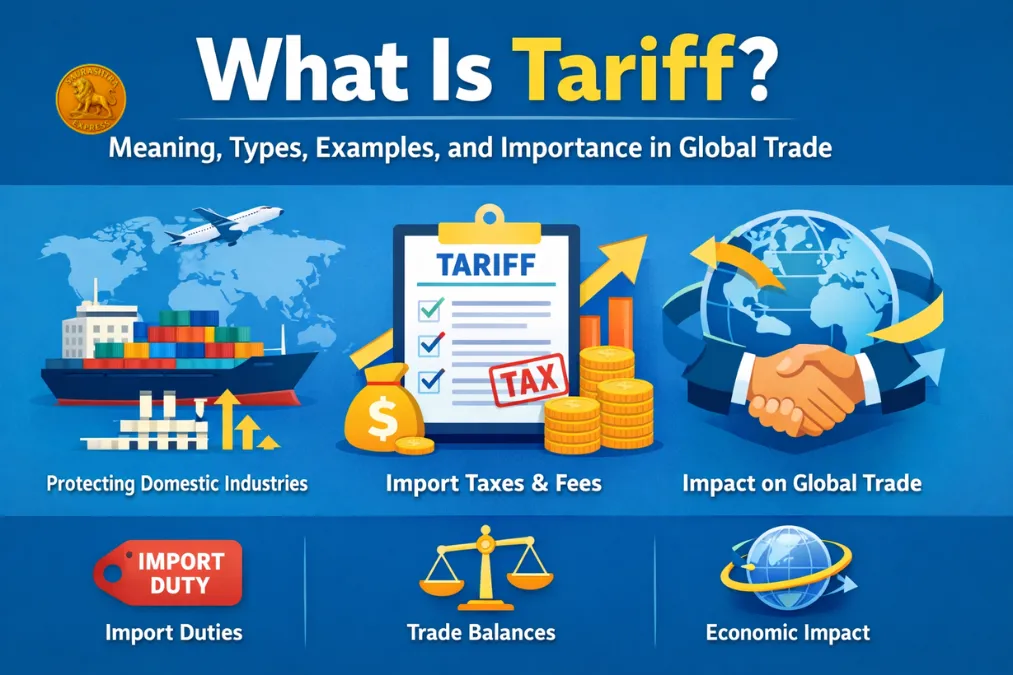
What is tariff is one of the most common questions asked when learning about economics, international trade, and government policies. A tariff is a tax imposed by a government on goods and services that are imported from other countries. It directly affects the price of foreign products and plays an important role in protecting domestic industries, controlling trade, and generating government revenue.
In simple words, when a country buys products from another country, the government may charge extra money on those goods at the border. This extra charge is called a tariff. Because of tariffs, imported goods often become more expensive than locally produced items.
Understanding what is tariff is essential because tariffs influence everyday products such as clothes, electronics, food items, vehicles, and fuel. They also shape trade relations between nations and impact economic growth.
What Is Tariff in Simple Terms
What is tariff can be explained very simply. A tariff is a form of tax that a government places on imported goods. It is collected by customs authorities when goods enter the country.
For example, if a country imposes a 10 percent tariff on imported shoes, and the original price of the shoes is $100, the importer must pay an extra $10 as tax. The total cost becomes $110. This higher price often makes domestic products more attractive to consumers.
Tariffs are mainly used to regulate trade, protect local businesses, and reduce dependence on foreign products.
Why Governments Use Tariffs
Governments apply tariffs for several important reasons. Understanding these reasons helps explain why tariffs are still widely used today.
Protection of Domestic Industries
One of the main purposes of a tariff is to protect local manufacturers. When imported goods become expensive due to tariffs, domestic producers can compete more easily in the market.
For example, if imported steel is cheaper than locally produced steel, domestic factories may suffer losses. By imposing tariffs, the government raises the price of imported steel, giving local industries a fair chance to survive and grow.
Revenue Generation
Tariffs are also a source of income for governments. Especially in developing countries, import duties contribute significantly to national revenue. This money is later used for public services such as infrastructure, healthcare, and education.
Reducing Trade Deficit
A trade deficit occurs when a country imports more than it exports. By making imports expensive, tariffs can reduce excessive imports and encourage people to buy domestic products, helping balance trade.
National Security
Certain industries such as defense equipment, energy, and food production are vital for national security. Governments use tariffs to ensure these industries remain strong and are not entirely dependent on foreign suppliers.
Types of Tariffs
To fully understand what is tariff, it is important to know the different types used in international trade.
Ad Valorem Tariff
An ad valorem tariff is charged as a percentage of the product’s value. This is the most common type of tariff.
For example, if a government applies a 15 percent tariff on imported mobile phones worth $500, the tariff amount will be $75.
Specific Tariff
A specific tariff is a fixed amount charged per unit of goods, regardless of price.
For example, $5 per kilogram of sugar or $100 per car.
Compound Tariff
A compound tariff combines both ad valorem and specific tariffs. The importer must pay a fixed amount plus a percentage of the product value.
Protective Tariff
Protective tariffs are imposed to shield domestic industries from foreign competition. These tariffs intentionally increase the price of imported goods.
Revenue Tariff
Revenue tariffs are mainly imposed to generate income for the government rather than to protect industries.
What Is Tariff Barrier
A tariff barrier refers to the use of tariffs to restrict international trade. High tariffs discourage imports and act as obstacles for foreign companies trying to enter a country’s market.
Tariff barriers are often criticized because they reduce free trade and increase costs for consumers. However, governments still use them to safeguard economic interests.
How Tariffs Affect Prices
Tariffs directly influence the prices consumers pay in the market.
When tariffs are imposed:
Imported goods become more expensive
Retail prices increase
Consumers may shift to domestic products
Overall market competition may decrease
In many cases, businesses pass the tariff cost directly to consumers, leading to inflationary pressure.
Advantages of Tariffs
Understanding what is tariff also involves learning its benefits.
Support for Local Employment
By protecting domestic industries, tariffs help preserve jobs and encourage local production.
Industrial Development
Tariffs give new industries time to grow and become competitive in the global market.
Government Income
Tariffs provide steady revenue that supports national development projects.
Economic Stability
Controlled imports help stabilize domestic markets during economic crises.
Disadvantages of Tariffs
Despite their benefits, tariffs also have drawbacks.
Higher Consumer Prices
Tariffs make imported goods expensive, increasing the cost of living.
Limited Product Choices
Reduced imports mean fewer options for consumers.
Trade Wars
When one country increases tariffs, other countries may retaliate. This leads to trade wars that harm global trade.
Reduced Efficiency
Protected industries may become less efficient due to lack of competition.
What Is Import Tariff
An import tariff is the most common form of tariff. It is charged on goods entering a country from abroad. Import tariffs aim to control the volume of imports and protect domestic production.
Examples of goods commonly subject to import tariffs include:
Automobiles
Electronics
Textiles
Agricultural products
Machinery
Import tariffs vary depending on trade agreements and government policies.
What Is Export Tariff
An export tariff is imposed on goods leaving a country. These are less common and are usually applied to natural resources such as minerals, oil, timber, or agricultural commodities.
Export tariffs help ensure that domestic industries have enough raw materials and prevent over-exporting valuable resources.
Difference Between Tariff and Tax
Although tariffs are a form of tax, there is a difference.
A tax is charged on income, sales, or property within a country.
A tariff is charged only on international trade goods.
All tariffs are taxes, but not all taxes are tariffs.
What Is Tariff in International Trade
In international trade, tariffs are tools used by governments to regulate imports and exports between nations. They influence trade flows, pricing, and market access.
Countries often negotiate tariff rates through trade agreements to promote cooperation and economic growth.
Role of Tariffs in Trade Agreements
Trade agreements aim to reduce or eliminate tariffs between member countries.
Examples include:
Free Trade Agreements
Regional Trade Agreements
Bilateral Trade Agreements
These agreements lower tariff rates to encourage cross-border trade and economic cooperation.
Tariffs and Free Trade
Free trade promotes the removal of tariffs and trade barriers. Supporters believe free trade leads to lower prices, innovation, and economic efficiency.
However, many countries adopt a mixed approach by allowing free trade in some sectors while protecting sensitive industries through tariffs.
Real-Life Examples of Tariffs
Tariffs are applied worldwide every day.
A country may impose high tariffs on imported cars to protect its automobile industry.
Agricultural tariffs are used to support farmers and stabilize food prices.
Steel and aluminum tariffs are often imposed to protect heavy industries.
These real-world applications show how tariffs shape national economies.
Impact of Tariffs on Developing Countries
For developing nations, tariffs play a crucial role in economic growth.
They help protect emerging industries from strong global competitors.
They generate government revenue.
They reduce dependence on imports.
However, excessive tariffs can limit growth by discouraging foreign investment.
Also read: What is Bharat Future City? Telangana’s Ambitious Fourth City Explained
Tariffs and Global Economy
Tariffs influence global supply chains and international relations.
High tariffs can disrupt trade routes and increase production costs.
Lower tariffs encourage global cooperation and economic integration.
The balance between protection and openness determines long-term economic stability.
Future of Tariffs
With globalization and digital trade expanding, tariff policies continue to evolve.
Many countries are moving toward reduced tariffs through international agreements.
At the same time, economic uncertainty and political tensions have led to renewed tariff use.
The future of tariffs will depend on global cooperation, economic priorities, and technological development.
Conclusion
Understanding what is tariff is essential for anyone interested in economics, trade, or public policy. A tariff is a government-imposed tax on imported or exported goods that affects prices, trade flows, and economic growth.
Tariffs protect domestic industries, generate revenue, and help manage trade balances. However, they can also raise consumer prices and create trade tensions.
In today’s interconnected world, tariffs remain a powerful economic tool. When used wisely, they support national development. When overused, they can slow growth and limit global cooperation.
By learning what is tariff and how it works, readers can better understand international trade decisions and their impact on everyday life.