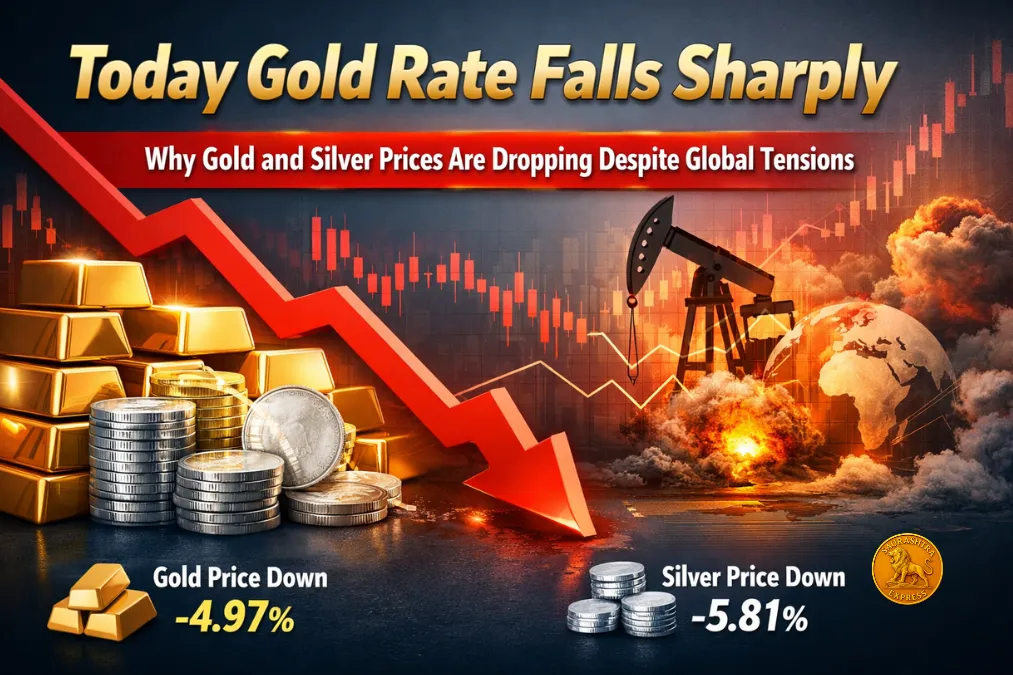
Today gold rate witnessed a steep decline on Monday morning, leaving investors puzzled as precious metals failed to behave like traditional safe-haven assets despite rising geopolitical tensions. Gold and silver, which usually gain during uncertain times such as wars or economic instability, are currently moving in the opposite direction.
The unexpected fall comes at a time when global markets are already under pressure due to ongoing conflicts in West Asia and rising crude oil prices. This unusual trend has raised important questions about whether gold is still a reliable safety investment.
Today Gold Rate and Silver Price Update
As per the latest market data, both gold and silver prices recorded significant losses in early trading:
| Commodity | Price (MCX) | Change (₹) | Percentage Drop |
|---|---|---|---|
| Gold Futures | ₹1,37,307 | -₹7,185 | -4.97% |
| Silver Futures | ₹2,13,600 | -₹13,172 | -5.81% |
The sharp fall in the today gold rate and silver prices has come as a surprise, especially since investors typically turn to these metals during periods of global uncertainty.
Why Are Gold and Silver Prices Falling?
1. Profit Booking After a Strong Rally
One of the main reasons behind the drop in the today gold rate is the massive rally seen in recent months. Gold and silver prices had surged earlier as investors rushed to secure their wealth amid geopolitical tensions.
This rapid increase pushed prices to unusually high levels. As a result, many investors are now selling their holdings to lock in profits, leading to a sudden correction in prices.
2. Changing Interest Rate Expectations
Another key factor influencing the today gold rate is the shift in global interest rate outlook.
With crude oil prices remaining above $100 per barrel, inflation concerns have intensified worldwide. This has reduced expectations of interest rate cuts and instead increased the possibility of rate hikes by central banks.
Gold does not provide fixed returns like bonds or savings instruments. When interest rates rise, investors often move their money into interest-bearing assets, reducing demand for gold. This is one of the biggest reasons for the current decline.
3. Global Market Pressure and Liquidity Issues
The fall in the today gold rate is also linked to broader market trends. Global stock markets, especially in Asia, have been experiencing heavy selling pressure.
In such situations, investors often sell gold to cover losses in equities or other investments. This process, known as liquidity-driven selling, is contributing to the decline in gold prices.
Market analysts suggest that gold’s high liquidity, which usually makes it attractive, is now working against it as investors quickly convert it into cash during market stress.
4. Continuous Decline in Global Gold Prices
The global trend further explains the weakness in the today gold rate.
| Market Indicator | Latest Movement |
|---|---|
| Spot Gold | Down ~2.5% |
| US Gold Futures | Down ~4.4% |
| Weekly Decline | Over 10% |
| Trend | 9 consecutive days of decline |
Gold prices have now dropped to their lowest levels in months, reflecting a consistent downward trend across international markets.
5. Silver’s Higher Volatility
Silver prices have fallen even more sharply than gold. This is because silver is generally more volatile and reacts strongly to market changes.
While gold is primarily considered a safe-haven asset, silver also has industrial demand. Economic uncertainty can impact industrial activity, which further pressures silver prices.
Global “Risk-Off” Sentiment Impacting All Assets
The current market situation is not limited to gold and silver alone. A widespread “risk-off” sentiment is affecting almost all asset classes, including equities, bonds, and commodities.
Experts believe that the extreme uncertainty in global markets is leading to simultaneous selling across different sectors.
Even traditionally safe assets like gold are not immune during such phases. This explains why the today gold rate is falling despite geopolitical tensions.
Role of Crude Oil and Inflation
Crude oil prices have remained elevated due to ongoing global conflicts, which has increased inflation concerns worldwide.
Typically, inflation supports gold prices, as investors buy gold to protect their purchasing power. However, in the current scenario, the expectation of higher interest rates is outweighing the inflation effect.
This shift in market focus is putting downward pressure on the today gold rate.
What Does This Mean for Investors?
The recent fall in the today gold rate does not necessarily indicate a long-term negative trend. Instead, it appears to be a correction after an extended period of price growth.
Key Takeaways for Investors:
- The decline is largely due to profit booking after a strong rally
- Rising interest rate expectations are reducing gold’s appeal
- Global market volatility is forcing investors to sell assets for liquidity
- Gold has not lost its safe-haven status, but its behavior has shifted temporarily
Investors should avoid panic selling and focus on long-term strategies. Historically, gold has recovered after similar corrections, especially during prolonged periods of uncertainty.
Should You Buy Gold Now?
For long-term investors, the current dip in the today gold rate may present a buying opportunity. However, market volatility is expected to continue in the near term due to:
- Ongoing geopolitical tensions
- Fluctuating crude oil prices
- Uncertainty around global interest rates
A cautious and phased investment approach is generally advisable during such periods.
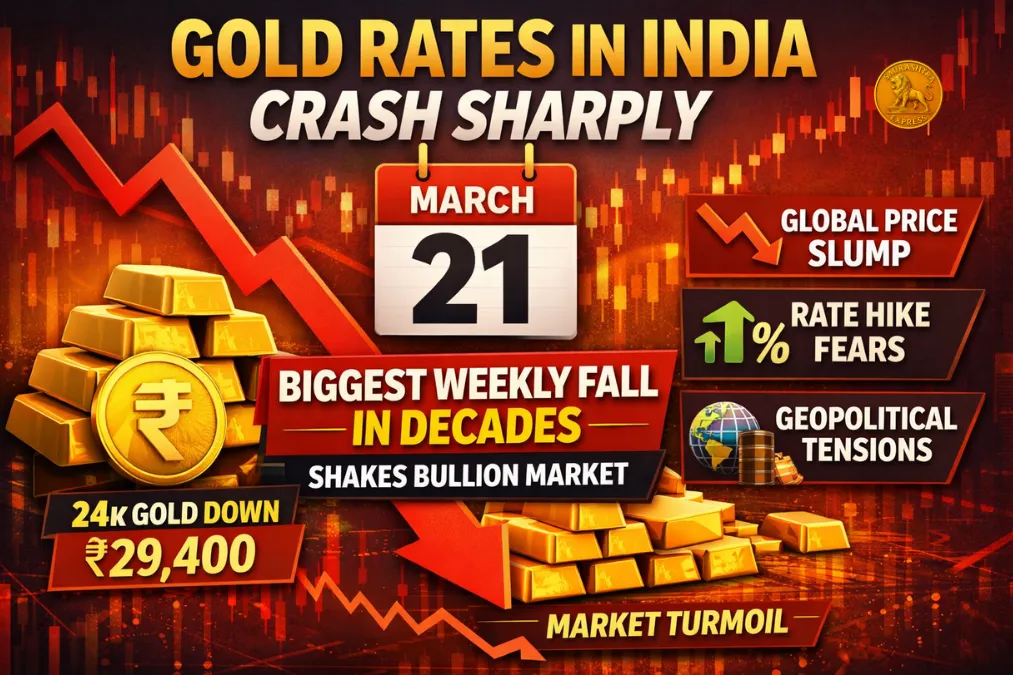
Also Read: Gold Rates In India Crash Sharply on March 21: Biggest Weekly Fall in Decades Shakes Bullion Market
Conclusion
The sharp fall in the today gold rate has challenged the traditional perception of gold as a safe-haven asset during crises. However, the decline is primarily driven by profit booking, changing interest rate expectations, and global market pressures rather than a fundamental weakness in gold itself.
While short-term volatility may continue, gold and silver are still expected to play an important role in diversified investment portfolios. For now, investors should stay calm, monitor market developments closely, and make informed decisions instead of reacting to sudden price movements.