
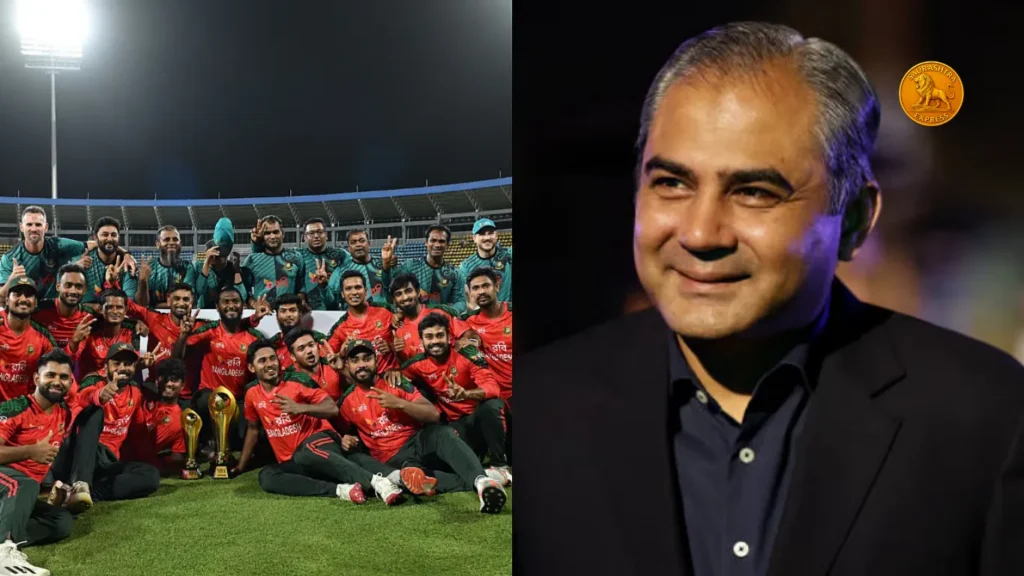
The build-up to the T20 World Cup 2026 has taken a dramatic and controversial turn, with Pakistan reportedly threatening to withdraw from the tournament if Bangladesh is excluded or sidelined amid growing political and security tensions. The development has sparked widespread debate in the global cricketing community, placing the International Cricket Council (ICC) under intense pressure to manage one of the most sensitive situations in recent World Cup history.
According to a report by Pakistan’s leading broadcaster Geo News, senior sources within the Pakistan Cricket Board (PCB) have claimed that Pakistan will not participate in the T20 World Cup 2026 if Bangladesh is forced out or if its participation is compromised. While neither the PCB nor the ICC has released an official statement, the report suggests that internal preparations for the tournament have already been paused, signaling the seriousness of Pakistan’s stance.
PCB Halts Preparations, Orders Contingency Planning
As per the report, the PCB has quietly instructed team management and selectors to stop active preparations for the T20 World Cup 2026. Officials have also been asked to develop contingency plans in case Pakistan formally decides to withdraw from the tournament.
This includes planning alternative international assignments, managing sponsorship obligations, and handling player availability should the PCB take the unprecedented step of pulling out from a global ICC event. Such a move would have far-reaching consequences, both financially and politically, for world cricket.
Despite the gravity of the situation, the PCB has so far chosen silence in public, allowing speculation to grow while diplomatic channels remain active behind the scenes.
Background: Bangladesh at the Center of the Storm
The controversy traces its roots to events in Bangladesh, where a series of violent incidents targeting members of the Hindu minority have triggered international concern. These developments have had direct repercussions on cricketing ties, particularly involving India and Bangladesh.
Following these incidents, the Board of Control for Cricket in India (BCCI) reportedly intervened, leading to the release of Bangladesh fast bowler Mustafizur Rahman from the Kolkata Knight Riders (KKR) squad ahead of the IPL 2026 season. The decision ignited anger within Bangladesh, with officials and fans alike accusing Indian authorities of politicizing sport.
The Bangladesh Cricket Board (BCB), reacting strongly, began pushing for changes related to its participation in the T20 World Cup 2026, including venue and group allocation adjustments.
ICC Rejects Bangladesh’s Group Change Request
According to reports published by cricket news outlet Cricinfo, the ICC held a crucial meeting in Dhaka on January 17 to address the concerns raised by the BCB. During this meeting, Bangladesh formally requested a change in its group placement for the T20 World Cup 2026.
Bangladesh’s Demand Explained
The BCB asked to be moved from Group C to Group B, arguing that such a change would allow the team to play all its group-stage matches in Sri Lanka instead of India. The board cited reduced travel, logistical convenience, and enhanced security as the primary reasons behind the request.
However, the ICC rejected the proposal, assuring the BCB that there was no specific security threat to the Bangladesh team in India. The governing body emphasized that all host venues had met international safety standards and that extensive security arrangements were already in place.
Despite rejecting the group change, the ICC reportedly gave Bangladesh a deadline of January 21 to confirm whether it would participate in the T20 World Cup 2026.
Pakistan Backs Bangladesh in a Show of Solidarity
Pakistan’s reported stance appears to be a direct response to what it perceives as unfair treatment of Bangladesh. PCB sources suggest that Pakistan views Bangladesh’s potential exclusion or marginalization as damaging to the spirit of international cricket.
By threatening to withdraw from the T20 World Cup 2026, Pakistan has significantly escalated the situation, transforming what began as a bilateral issue into a major ICC-wide crisis.
If Pakistan follows through, the tournament could lose one of its biggest teams, broadcasters could face losses, and sponsors might demand explanations, making this one of the most complicated scenarios the ICC has encountered in years.
Mustafizur Rahman IPL Controversy Explained
At the heart of the dispute lies the case of Mustafizur Rahman, whose removal from the IPL sparked outrage in Bangladesh.
Timeline of Events
- December 16: KKR purchases Mustafizur Rahman for ₹9.20 crore at the IPL mini-auction.
- Early January: Protests emerge in India following reports of violence against Hindus in Bangladesh.
- January 3: Acting on BCCI’s directive, KKR releases Mustafizur Rahman from its IPL 2026 squad.
- Aftermath: Bangladesh government bans IPL broadcasts within the country in protest.
The incident quickly escalated beyond cricket, with diplomatic undertones shaping the narrative.
Bangladesh Government Bans IPL Broadcasts
In response to Mustafizur Rahman’s exclusion, the Bangladesh government imposed a ban on IPL match broadcasts within the country. Officials cited discrimination and unfair treatment of Bangladeshi players as the primary reasons behind the decision.
Soon after, Bangladesh formally raised concerns about player safety and demanded changes to T20 World Cup 2026 venues, arguing that the same factors that led to the IPL controversy could affect the World Cup as well.
Bangladesh’s Group C Fixtures Confirmed
Despite the ongoing dispute, Bangladesh remains officially listed in Group C of the T20 World Cup 2026, with matches scheduled across major Indian venues.
Bangladesh Group-Stage Schedule – T20 World Cup 2026
| Date | Opponent | Venue |
|---|---|---|
| February 7 | West Indies | Eden Gardens, Kolkata |
| February 9 | Italy | Eden Gardens, Kolkata |
| February 14 | England | Eden Gardens, Kolkata |
| February 17 | Nepal | Mumbai |
All three initial matches are set to be played at Eden Gardens, one of India’s most iconic cricket stadiums, followed by the final group match in Mumbai.
Pakistan’s Withdrawal Could Reshape the Tournament
If Pakistan withdraws from the T20 World Cup 2026, the ICC may be forced to redraw groups, revise fixtures, and reconsider qualification scenarios. Such changes could also affect broadcasters, ticket sales, and global fan engagement.
Experts warn that a Pakistan boycott could trigger a domino effect, encouraging other boards to take stronger political positions, potentially undermining the ICC’s authority.
Mustafizur Rahman: Career Snapshot
Despite the controversy, Mustafizur Rahman remains one of Bangladesh’s most accomplished fast bowlers in T20 cricket.
Mustafizur Rahman – IPL Career Overview
| Category | Record |
| Matches Played | 60 |
| Wickets | 65 |
| Best Bowling | 4/29 |
| Economy Rate | 8.13 |
| IPL Teams | Delhi Capitals, Kolkata Knight Riders |
| Sponsors | Hero FinCorp |
| Seasons Played | All Seasons |
His absence from IPL 2026 has deprived fans of a proven match-winner and added fuel to the ongoing dispute.
Read also: India vs New Zealand Schedule T20: Complete Match Dates, Venues, Timings, Squads and All Key Updates
ICC Under Pressure to Find Middle Ground
With Bangladesh awaiting clarity and Pakistan reportedly prepared to take a drastic step, the ICC now faces one of its toughest tests. Balancing political realities, player safety, and the integrity of the T20 World Cup 2026 will require careful diplomacy.
Sources indicate that emergency discussions are underway, with senior ICC officials exploring possible compromises that could prevent further escalation.
What Lies Ahead for T20 World Cup 2026?
As the January 21 deadline approaches, all eyes remain on Bangladesh’s final decision and the ICC’s response. Whether Pakistan ultimately follows through on its threat or whether behind-the-scenes negotiations defuse the situation remains to be seen.
One thing is certain: the T20 World Cup 2026 is no longer just a cricket tournament. It has become a complex intersection of sport, politics, and international relations, with decisions made in the coming days set to shape the future of global cricket.
Cricket fans worldwide will be hoping that diplomacy prevails, ensuring that the world’s biggest T20 event goes ahead with all major teams competing on the field rather than battling off it.