
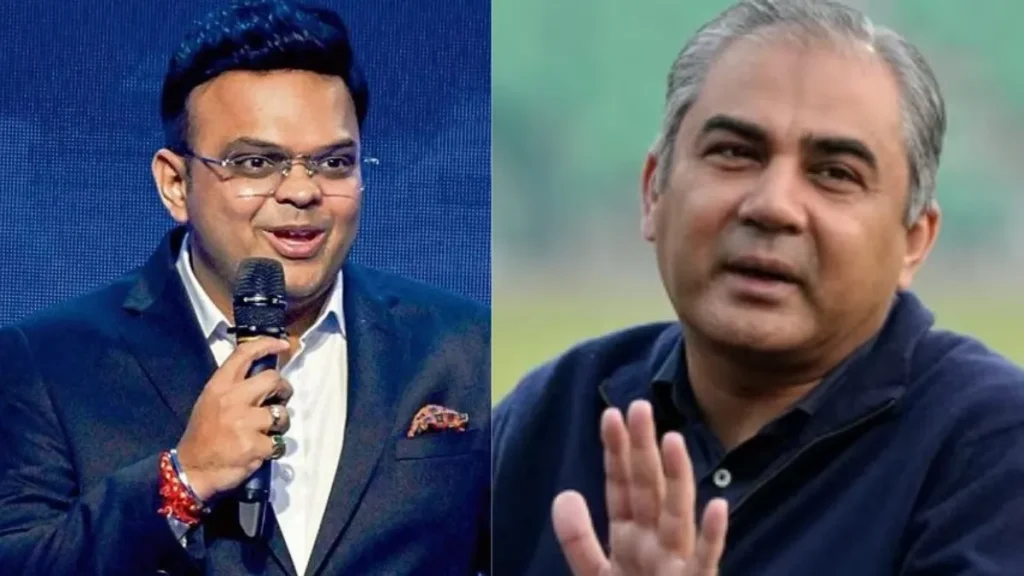
Bangladesh Out From T20 World Cup: The global cricketing landscape has been thrown into turmoil after confirmation that Bangladesh is out from the T20 World Cup, a development that has sparked fierce political reactions, diplomatic tension, and open confrontation between national boards and the International Cricket Council (ICC). At the centre of the storm is Pakistan Cricket Board (PCB) chairman Mohsin Naqvi, whose sharp criticism of the ICC has escalated what began as a scheduling dispute into a full-scale governance crisis.
With the tournament scheduled to begin on February 7, the controversy has raised serious questions about cricket’s independence from political influence and the ICC’s ability to manage multinational events amid rising geopolitical friction in South Asia.
PCB Chairman Accuses ICC of “Injustice” After Bangladesh Exit
Speaking to reporters in Lahore, Mohsin Naqvi launched a direct attack on the ICC, accusing the governing body of treating Bangladesh unfairly and ignoring legitimate security concerns. Naqvi, who simultaneously serves as Pakistan’s Interior Minister, stated that the decision to remove Bangladesh from the competition reflected “institutional bias” rather than sporting merit.
His remarks came days after the ICC formally approved Bangladesh’s replacement by Scotland in Group C, following Bangladesh’s refusal to play its World Cup matches in India. The ICC cited independent security assessments that found no credible threat to visiting teams.
Despite this, Naqvi insisted that Bangladesh had been wronged and suggested that Pakistan could reconsider its own participation in the tournament.
“Government Will Decide,” Says Naqvi
In an unusually blunt admission, Naqvi made it clear that the PCB does not operate independently of the state.
“We are under the Government of Pakistan, not the ICC,” he said, confirming that multiple scenarios—referred to internally as Plan A, Plan B, and Plan C—have been prepared regarding Pakistan’s involvement in the World Cup.
According to Naqvi, the final decision rests with Prime Minister Shehbaz Sharif, who was abroad at the time of the statement. Until then, Pakistan’s participation remains officially “under review.”
This declaration has alarmed cricket administrators worldwide, as it openly challenges the ICC’s authority and reinforces concerns about political interference in international sport.
How the Bangladesh Crisis Began
The chain of events that ultimately led to Bangladesh out from T20 World Cup began with a decision by the Bangladesh Cricket Board (BCB) to refuse travel to India for its scheduled group-stage matches.
The BCB cited security concerns, pointing to regional tensions and the termination of fast bowler Mustafizur Rahman’s IPL contract, which they argued contributed to an unstable environment.
Bangladesh formally requested the ICC to move its matches to Sri Lanka, a proposal the governing body rejected after consulting security experts and local authorities. The ICC maintained that India met all safety standards required for hosting an international event.
When Bangladesh declined to reverse its stance, the ICC moved swiftly to preserve the tournament’s structure, approving Scotland as a replacement.
Pakistan Stands Alone in Supporting Bangladesh
Among the ICC’s 15-member board, Pakistan was reportedly the only country to vote in favour of Bangladesh’s position. While Naqvi portrayed this as an act of solidarity with a neighbouring cricketing nation, officials in India and other cricket boards interpret the move very differently.
Senior sources in New Delhi believe Pakistan is attempting to use Bangladesh’s situation as leverage to revive its long-standing push for a “hybrid model”, under which matches involving Pakistan would be played at neutral venues rather than in India.
From this perspective, the Bangladesh controversy provides a convenient precedent to challenge India’s hosting rights and pressure the ICC into making future concessions.
Geopolitics Behind the Cricket Crisis
What appears on the surface to be a dispute over venues has rapidly evolved into a geopolitical confrontation.
By framing the issue as a matter of justice and safety, Pakistan is seeking to legitimise its own historical reluctance to tour India. Critics argue that Naqvi’s statements are less about defending Bangladesh and more about building a regional narrative against India within international cricket.
The strategy, according to analysts, is to portray the ICC as dismissive of smaller cricketing nations while positioning Pakistan as a champion of fairness—despite its own selective history of accepting or rejecting ICC rulings.
ICC’s Dilemma: Authority vs Accommodation
The ICC now finds itself in a difficult position. On one hand, it must uphold its authority and ensure tournaments proceed smoothly. On the other, it must manage the political sensitivities of powerful member boards.
By removing Bangladesh and confirming Scotland’s inclusion, the ICC signalled that non-compliance would not be tolerated, even from full-member nations. However, Pakistan’s public defiance threatens to undermine that stance.
Cricket governance experts warn that allowing governments to dictate participation could set a dangerous precedent, potentially destabilising future global events.
Scotland’s Unexpected Opportunity
While the controversy has dominated headlines, Scotland’s inclusion represents a major moment for Associate cricket.
The Scottish team, which had narrowly missed direct qualification, now finds itself competing on one of the world’s biggest stages. ICC officials described the decision as necessary to maintain competitive balance and protect the tournament’s commercial commitments.
For Scotland, the moment is historic. For Bangladesh, it marks a painful setback with long-term implications for its international standing.
Fallout for Bangladesh Cricket
The confirmation that Bangladesh is out from T20 World Cup has triggered intense debate within the country’s cricketing circles.
Former players and analysts are divided. Some argue the BCB was right to prioritise player safety, while others believe the decision has isolated Bangladesh diplomatically and damaged its credibility.
Commercially, the exit could result in lost revenue, reduced sponsorship interest, and diminished influence within ICC decision-making forums.
Pakistan’s Risky Gamble
By escalating the issue publicly, Pakistan has placed itself on a collision course with the ICC.
If Pakistan were to withdraw or boycott matches, the consequences could include financial penalties, loss of hosting rights, or even suspension from ICC events. While such outcomes remain unlikely, the mere possibility underscores how serious the standoff has become.
Critics within Pakistan have also questioned whether mixing political authority with cricket administration serves the sport’s long-term interests.
India Maintains Silence but Holds Firm
India, one of the tournament’s co-hosts, has largely refrained from engaging publicly in the dispute. Officials have consistently pointed to ICC security clearances and past successful events as evidence that safety concerns are unfounded.
Behind the scenes, however, Indian authorities are said to be closely monitoring Pakistan’s statements, viewing them as part of a broader pattern of politicising sport.
Also read: Ind vs NZ 2nd T20I Highlights: India Complete Dominant Chase in Record Style
What This Means for Global Cricket
The Bangladesh controversy highlights a growing challenge for international sport: balancing national sovereignty with global governance.
As cricket continues to expand commercially, tournaments like the T20 World Cup depend on predictable schedules, stable venues, and unified decision-making. Political interventions threaten all three.
If boards begin openly defying ICC rulings, the sport risks fragmentation—something administrators have worked for decades to avoid.
Also read: Nathan Ellis Ruled Out of BBL Finals, Hobart Hurricanes Face Major Setback
Conclusion:
With the tournament set to begin soon, all eyes are now on Islamabad and the office of Prime Minister Shehbaz Sharif. Whether Pakistan ultimately participates or not, the damage to cricket’s governing structures has already been done.
For Bangladesh, the immediate reality is stark: Bangladesh out from T20 World Cup, replaced and sidelined on the global stage. For the ICC, the episode serves as a reminder that enforcing authority is becoming increasingly complex in a politically charged world.
As cricket fans prepare for the opening match, the sport faces uncomfortable questions about its future—questions that go far beyond boundaries and scorecards.