
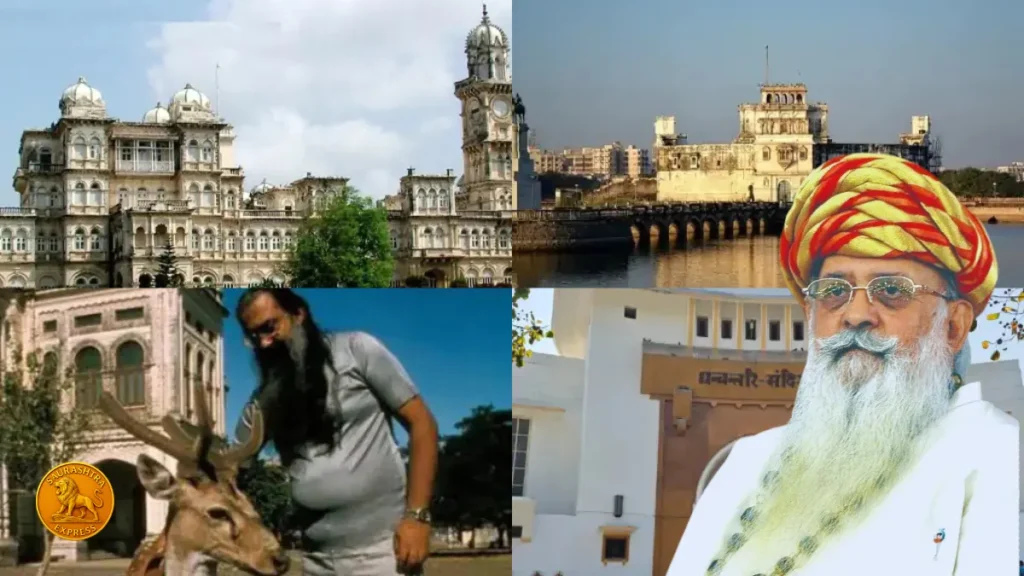
On the birth anniversary of Jamsaheb Shatrushalyasinhji, a remarkable tribute was paid to the royal legacy of Nawanagar with the presentation of the state’s historic national anthem and flag song. The commemorative event revived a powerful chapter from Jamnagar’s past, reconnecting citizens with a musical tradition that dates back to the turbulent years of the Second World War.
The rare recording of the anthem was shared publicly by a representative of the royal family, drawing widespread interest among historians, cultural scholars, and residents of Jamnagar. For many, the occasion was not just a birthday tribute but a reminder of the humanitarian and cultural contributions associated with the princely state of Nawanagar.
A Legacy Linked to World War II
The origins of the Nawanagar anthem are closely tied to the extraordinary humanitarian efforts undertaken during World War II. In 1943, amid the devastation sweeping across Europe, the then ruler of Nawanagar, Jam Saheb Digvijaysinhji, opened his doors to Polish refugee children and women displaced by the war. He provided them shelter at his summer palace in Balachadi, near Jamnagar.
The Balachadi palace, which today functions as part of the Sainik School Balachadi, became a safe haven for hundreds of Polish refugees. During that period, it was customary to sing the British, Polish, and Nawanagar state anthems together at gatherings in Balachadi. This gesture symbolized unity, compassion, and international solidarity at a time of global crisis.
The revival of the anthem on the birth anniversary of Jamsaheb Shatrushalyasinhji therefore carries deep historical significance. It reflects not only royal tradition but also Nawanagar’s unique place in global wartime history.
Recorded on Gramophone: A Rare Musical Treasure
The Nawanagar State National Anthem and Flag Song were officially recorded by His Master’s Voice (H.M.V., Dum Dum). The gramophone record featured two titles on either side: “Jamnagar Flag Salutation” and “Jamnagar National Anthem,” catalogued under record numbers 15381-OML 1745 and 15381-OML 1746.
Interestingly, the melody of these songs was inspired by a popular track from the classic film Sikandar. The anthem’s tune was based on the song “Zindagi Hai Pyar Se, Pyar Mein Jitaye,” which was widely recognized at the time. Adapting a cinematic melody into a state anthem reflects how music and culture were interwoven in the 1940s.
Composition and Intellectual Influence-Jamsaheb Shatrushalyasinhji
The anthem and flag song were written by Surasinghji Shivsinhji Jadeja, who was serving as the Revenue Secretary of the state at the time. He arranged for the state military band to perform the composition, lending it an official and ceremonial character.
Historical records note that Surasinghji Jadeja had received advanced agricultural education in England and the United States, supported by Jam Ranjitsinhji, further illustrating the progressive outlook of the Nawanagar rulers. The introductory section of the anthem praised the sacred land of Halar in Saurashtra and recalled the founding of Jamnagar nearly four centuries earlier by Jam Rawal, who laid the foundation of the Nawanagar state.
The lyrics emphasized pride in the land of Halar and described the Jam as the guardian and benefactor of this valorous region. It also highlighted the educational reforms initiated under royal patronage, which enabled thousands of children to receive free primary and secondary education.
A Message of Pride and Devotion
The anthem’s opening address called upon every child of Nawanagar to feel pride in the holy land of Halar. It described the Jam as a descendant of Lord Krishna, revered by millions across India. The message was clear: singing the anthem was not merely a ritual but an expression of loyalty, gratitude, and devotion to one’s homeland and ruler.
The flag song, recorded under the same series, expressed unwavering pride in the Jam and Jamnagar. Its lyrics celebrated the flag as a symbol of honor, courage, and national spirit. It portrayed the banner of Jam as a source of inspiration for bravery and unity, declaring that it should always fly high and command respect.
Preserving History for Future Generations
The preservation of these historic recordings is credited to senior Jamnagar historian Harivadan Shantilal Joshi, who carefully safeguarded the gramophone record and its accompanying details. His efforts ensured that this rare cultural artifact was not lost to time.
According to elderly residents of Jamnagar, during the 1940s the Nawanagar anthem was included in early childhood textbooks, then referred to as “Bal Pothi,” equivalent to present-day pre-primary education. Children would sing the anthem and flag song with enthusiasm and affection, expressing their deep respect for the Jam Saheb.
Renewed Cultural Relevance
The presentation of the anthem on the birth anniversary of Jamsaheb Shatrushalyasinhji has reignited interest in Jamnagar’s royal heritage. Beyond its ceremonial value, the event serves as a reminder of Nawanagar’s humanitarian history, educational reforms, and strong cultural identity.
As Jamnagar continues to grow as a modern city, moments like these reinforce the enduring bond between its people and their historical roots. The anthem stands as a testament to loyalty, compassion, and pride—values that remain relevant even decades after the princely era.
Through the revival of this historic composition, the legacy of Jamsaheb Shatrushalyasinhji and the rulers of Nawanagar continues to inspire new generations, both in India and around the world.